
Last updated November 15, 2026
 Wrought iron
 Wood & steel frame
 Farm & ranch
 Sliding driveway gates
 LiftMaster operators
Free on-site gate assessment - hinges, posts, and your LiftMaster or Nice gate operator checked before anything is quoted
The assessment is free and the quote is the invoice.
Get your free estimateGate Repair Permits, Codes & Inspections in Enterprise, NV: What You Need to Know
Most gate problems in Enterprise get solved with a wrench, a control board and an afternoon. The trouble starts later, at the closing table, when a buyer’s inspector asks for the permit record on the electric gate operator and there isn’t one. An unpermitted gate system installed by a previous owner can stall a home sale or trigger a correction notice before closing, and it’s one of the most overlooked title issues in Clark County residential real estate. This guide walks through when a gate repair is exempt maintenance and when it becomes a regulated alteration, what inspectors actually look at, how HOA architectural approval runs alongside county permitting in Enterprise, and how to bring an existing unpermitted gate into compliance.
Quick Answer
In Enterprise, routine gate repair and like-for-like part replacement generally don’t require a permit, but new gate installation, new electrical circuits to an operator, and alterations to the operator’s wiring or safety devices usually do. Clark County inspectors focus on the electrical connection and on UL 325 safety features: entrapment protection, photo eyes and the means of automatic release. Confirm the specifics with Clark County’s building department before work starts, because the permit obligation sits with the property owner.
Styles & brands we work with
- Wrought iron
- Wood & steel frame
- Farm & ranch
- Sliding driveway gates
- LiftMaster operators
Table of Contents
- Repair vs. Alteration: Where Enterprise Draws the Permit Line
- Electrical Permits for Gate Operators in Clark County
- What Inspectors Actually Check: NEC and UL 325
- HOA Architectural Approval in Enterprise Master-Planned Communities
- Fire Code and Automatic Gate Release Requirements
- How to Permit an Existing Unpermitted Gate
- The Inspection Sequence, Step by Step
- Records, Resale and Your Documentation File
Repair vs. Alteration: Where Enterprise Draws the Permit Line
The single most useful distinction in this whole subject is the one between maintenance and alteration. Maintenance keeps a gate doing what it already did. An alteration changes the system in a way that touches electrical work, safety devices or the structure. Clark County treats those two categories differently, and homeowners in Enterprise get into trouble when they assume every repair is automatically exempt or every repair automatically needs a permit.
Repairs that are typically treated as exempt maintenance include:
- Replacing a worn hinge, roller, latch or track component on a manual gate.
- Swapping a failed remote control, keypad or receiver that plugs into an existing low-voltage connection.
- Adjusting gate travel limits, force settings or closing speed on an existing operator.
- Replacing a battery in a Mighty Mule or LiftMaster operator that uses a battery backup.
- Straightening a sagging gate leaf and re-hanging it on its existing posts.
Work that usually crosses into alteration territory includes:
- Installing a new electric gate operator where none existed before.
- Running a new power circuit, adding a dedicated breaker or extending conduit to an operator.
- Replacing or relocating safety devices such as photo eyes, safety edges or loop detectors.
- Changing the gate’s opening direction, widening the opening or replacing the posts.
- Converting a manual gate to automatic operation.
One wrinkle that catches people in Enterprise: a like-for-like operator swap can look like repair on paper and still be treated as a regulated alteration if the new unit has a different electrical draw or a different safety configuration. If you’re replacing a FAAC or BFT operator with a different model, ask the county directly rather than assuming. The permit question is answered by the scope of the work, not by whether the gate still opens.
Electrical Permits for Gate Operators in Clark County
If a gate operator needs new line voltage, you’re in electrical permit territory. That’s true whether the circuit is being extended from the house, tapped from a nearby outbuilding or run underground to a pedestal at the gate line. Low-voltage control wiring between the operator and its accessories is a different story than the 120-volt feed, and inspectors know the difference.
What tends to surprise homeowners in Enterprise is how much of the electrical scope is invisible once the trench is closed. The inspector can’t see the conduit depth, the conductor type or the bonding once everything is buried and the gate is back in service. That’s exactly why the permit exists: it creates a record that the work was inspected before it disappeared into the ground. Pulling a permit after the fact is possible, but it involves exposing work that was already buried, and that’s a much more expensive proposition than doing it in the right order.
In practical terms, plan the electrical side of an automatic gate installation like this:
- Confirm with Clark County whether the specific scope needs an electrical permit and what drawings they want.
- Have the circuit and any trenching inspected before the conduit is covered and the gate operator is energized.
- Provide the operator’s installation instructions and UL 325 documentation to the inspector at the rough-in stage.
- Schedule the final inspection after the operator is mounted, the safety devices are in place and the gate cycles correctly.
- Keep the signed inspection card and the permit number with the property records.
If your gate repair involves nothing more than a failed control board or a bad receiver on an existing, permitted circuit, that’s a repair, not new electrical work. When the scope is genuinely unclear, that’s the moment to stop and ask. Our electric gate repair work starts with figuring out whether the fix touches the electrical system or stays on the low-voltage side, because that determines what paperwork the job needs before anyone picks up a tool.
What Inspectors Actually Check: NEC and UL 325
UL 325 is the safety standard for gate operators, and it’s the checklist most inspectors are working from when they look at a residential automatic gate. The National Electrical Code covers the wiring and the disconnect. Between the two, an inspector is asking a fairly small number of questions, but each one can fail a job.
The core items inspectors look at:
- Entrapment protection. The operator must have an inherent means of entrapment protection or a connected external device, and it has to be functioning at the time of inspection. Photo eyes and safety edges are the most common external devices.
- Force and sensitivity settings. The operator must reverse or stop on obstruction within the limits set by the manufacturer. A gate that pushes through a blockage fails this.
- Disconnect means. There has to be a way to remove power from the operator that is accessible and correctly labeled.
- Wiring method and protection. Conductors need to be in appropriate conduit and protected from physical damage, with correct grounding and bonding.
- Manual release. The operator must have a manual release that works and is accessible to the property owner.
- Signage. Warning placards on the gate and operator, where the manufacturer supplies them, should be in place.
The items most commonly skipped are the ones that don’t affect whether the gate opens. Photo eyes get mounted but not aligned. Safety edges get wired but not tested. Force settings get cranked up because the gate was binding and nobody wanted to fix the bind. An operator that’s been tuned to force its way through an obstruction will fail a UL 325 review, and it will also eventually hurt something. Alignment, testing and a properly adjusted force setting are what separate a gate that passes from a gate that merely works.
This is where brand familiarity helps. A LiftMaster operator and a FAAC operator handle entrapment protection and force calibration differently, and the settings that satisfy one won’t be the right procedure on the other. Our technicians have up to 8 years of experience and work on the specific systems they’re looking at, not a generic checklist borrowed from a different brand.
HOA Architectural Approval in Enterprise Master-Planned Communities
Enterprise has a lot of master-planned housing, and in those neighborhoods there are usually two approval processes running in parallel. The county permit governs the construction and the electrical work. The HOA architectural review governs whether the gate is allowed to be there at all, and what it’s allowed to look like. They don’t substitute for each other, and passing one has no bearing on the other.
HOA architectural committees in Enterprise typically focus on:
- Gate height, style and material, and whether they match the community’s design standards.
- Setback from the property line and visibility from the street.
- Color and finish, including whether the operator housing is screened from view.
- Whether the gate is visible from a neighboring lot and how landscaping is affected.
- Noise from the operator, particularly on gates close to a shared wall.
The sequence matters. Get the HOA’s architectural approval in writing before you order the gate or the operator, because a denial after fabrication is an expensive reversal. Then pull the county permit based on the approved design. If a design detail changes during installation, the change may need to go back to the architectural committee before the final county inspection, and the two processes can stall each other if they’re handled out of order.
One thing we’ve seen in Enterprise: homeowners who are replacing an existing gate sometimes assume the original approval carries over. It usually doesn’t if the new gate differs in height, material or color, and a lot of older gates in the area predate the current standards. Pull the community’s current architectural guidelines before assuming anything.
Fire Code and Automatic Gate Release Requirements
Automatic gates on residential driveways sit at the intersection of two safety systems that are often out of sync: the UL 325 entrapment protection that keeps a person from being crushed, and the fire code requirement that emergency responders can get through the gate. Those are separate concerns, and a gate can pass one and fail the other.
In general terms, fire code looks for a reliable way for emergency vehicles to open or bypass an automatic gate without waiting for a resident. The common methods are:
- An approved keypad or access credential issued to the fire department.
- A siren-activated or strobe-activated opening feature, where the local authority accepts it.
- A physical key or manual release that responders can operate from outside the property.
- Loop detectors configured to open for emergency vehicles.
What gets homeowners in Enterprise into trouble is a gate that was installed without any of these, or one where the emergency access feature was disabled because it kept triggering. A siren sensor that opens the gate every time an alarm goes off nearby gets unplugged fast, and then the gate is out of compliance and nobody knows it. If your operator has a siren-activated opening feature, it should be tested, not defeated.
The other moving part is the gate’s manual release. It has to be reachable and operable from outside the gate line, and it has to actually work. A manual release that’s seized from disuse is not a release. Every few months, run it. If it doesn’t move, that’s a repair, and it’s the kind of repair that matters more than most people realize.
Fire code details vary by jurisdiction and by the type of property, so confirm the exact requirement with the Clark County Fire Department and your HOA. For commercial gates on shared access drives in Enterprise, the requirements are typically stricter than for a single residential driveway, and the documentation burden is heavier.
How to Permit an Existing Unpermitted Gate
This is the scenario that comes up most often at a sale: a gate system has been working for years, and there’s no permit on record. It’s not a disaster, but it is a process, and it’s better started early. The general sequence in Clark County looks like this:
- Establish what’s actually installed. Gather the operator make and model, the electrical drawings or a photo of the panel, and any manufacturer documentation you can find. Brands like LiftMaster and FAAC publish installation and UL 325 documentation for their current models, which will help.
- Contact Clark County’s building department and describe the existing installation. Ask what they’ll require to permit it after the fact, and ask specifically whether any portion of the work needs to be exposed for inspection.
- Have the installation assessed by a gate specialist before the county visit, so you know what’s non-compliant and can fix it in one pass rather than being sent back for corrections.
- Correct the safety items first. Entrapment protection, force settings, the manual release and the disconnect are what an inspector will look at immediately, and they’re also the items that protect people.
- Submit the permit application with drawings, equipment documentation and whatever the department has asked for.
- Schedule the inspection once the corrective work is done. Have the gate cycled and the safety devices demonstrated, and have someone on site who knows the system.
- Keep the signed-off permit with the deed or title documents, not in a drawer in the garage.
The most common failure in this process is doing the permitting without fixing the underlying safety issues first. An inspector who arrives at a gate with force settings cranked past the manufacturer’s limit will fail the job regardless of how complete the paperwork is. Get the gate right, then get it inspected. Our gate repair work in these situations is aimed at getting the system to pass on the first visit, because a repeat inspection is a repeat fee and another delay at closing.
The Inspection Sequence, Step by Step
For a new installation or a significant alteration in Enterprise, the inspection is usually split into stages rather than one visit. Knowing the order takes the guesswork out of scheduling.
- Pre-construction review. The permit application covers the gate location, the operator, the electrical scope and the safety devices. Approval happens before work begins.
- Rough-in inspection. This is the electrical stage. Conduit, conductors, bonding and the disconnect are checked before anything gets buried or closed up. This stage can’t be skipped once the trench is filled.
- Mounting and device installation. The operator, photo eyes, safety edges, loop detectors and signage go in. This stage usually isn’t separately inspected but it determines whether the final passes.
- Final inspection. The gate is cycled and the safety devices are demonstrated. Force settings, reversal on obstruction, the manual release and the disconnect are all checked. The inspector wants to see the gate operate, not just look at it.
- Sign-off and documentation. The approved inspection and final permit go into your property records and your closing file.
Two things shorten the timeline. First, having the manufacturer’s documentation on site. Second, having someone present who can explain the system and adjust settings on the spot if the inspector asks for a change. A gate that fails a minor setting check with nobody there to tune it is a rescheduled inspection, and rescheduling is where the delay comes from.
Records, Resale and Your Documentation File
The paperwork you keep matters more than most homeowners expect, and it matters most in a sale. When a buyer’s inspector flags an automatic gate, what they’re looking for is evidence that the installation was permitted, inspected and compliant. If that evidence doesn’t exist, the sale stalls while it’s produced, and the cost of producing it under time pressure is higher than the cost of doing it right.
Keep the following together, ideally with your title documents:
- The permit number and the final inspection sign-off for the gate installation.
- The operator’s make, model and installation manual, including the UL 325 documentation.
- Records of any electrical work on the circuit, with the inspection card if there is one.
- The HOA architectural approval letter.
- Records of any repair that touched the safety devices, including the date and what was changed.
If you’re in an Enterprise community with a fire department access credential for the gate, keep that documentation too. It’s the kind of thing that gets lost for years and then becomes urgent on a deadline.
The other reason to keep records is practical. When a gate repair comes up years later, the documentation tells the next technician what’s already been done, what’s been replaced and what the settings were originally. Our team works from the Gate Repair Enterprise approach of diagnosing a system rather than guessing at it, and existing records make that faster.
Common Mistakes to Avoid
- Assuming every repair is permit-free. Replacing an operator with a different model can cross into alteration territory even though the gate still opens. Ask Clark County before the work, not after.
- Getting the HOA approval after the county permit. In Enterprise master-planned communities, a design change requested by the HOA can force a permit revision. Get the architectural approval in writing first.
- Burying the conduit before the electrical inspection. Once the trench is closed, the rough-in is unverifiable, and permitting it after the fact means exposing the work.
- Disabling the safety devices to make the gate stop misbehaving. Photo eyes that keep triggering and siren sensors that keep opening the gate usually indicate a real alignment, wiring or interference problem. Disabling them creates a compliance failure and a safety risk.
- Never testing the manual release. A release that’s seized from disuse is not a release. Exercise it periodically so it works when someone actually needs it.
- Cranking up the force setting to overcome a binding gate. The bind is the problem. Force settings above the manufacturer’s limit will fail a UL 325 review and can injure someone.
- Keeping the permit in the garage drawer. Store gate documentation with the title or deed. The moment you need it is the moment you’re selling, and that’s not the time to be searching.
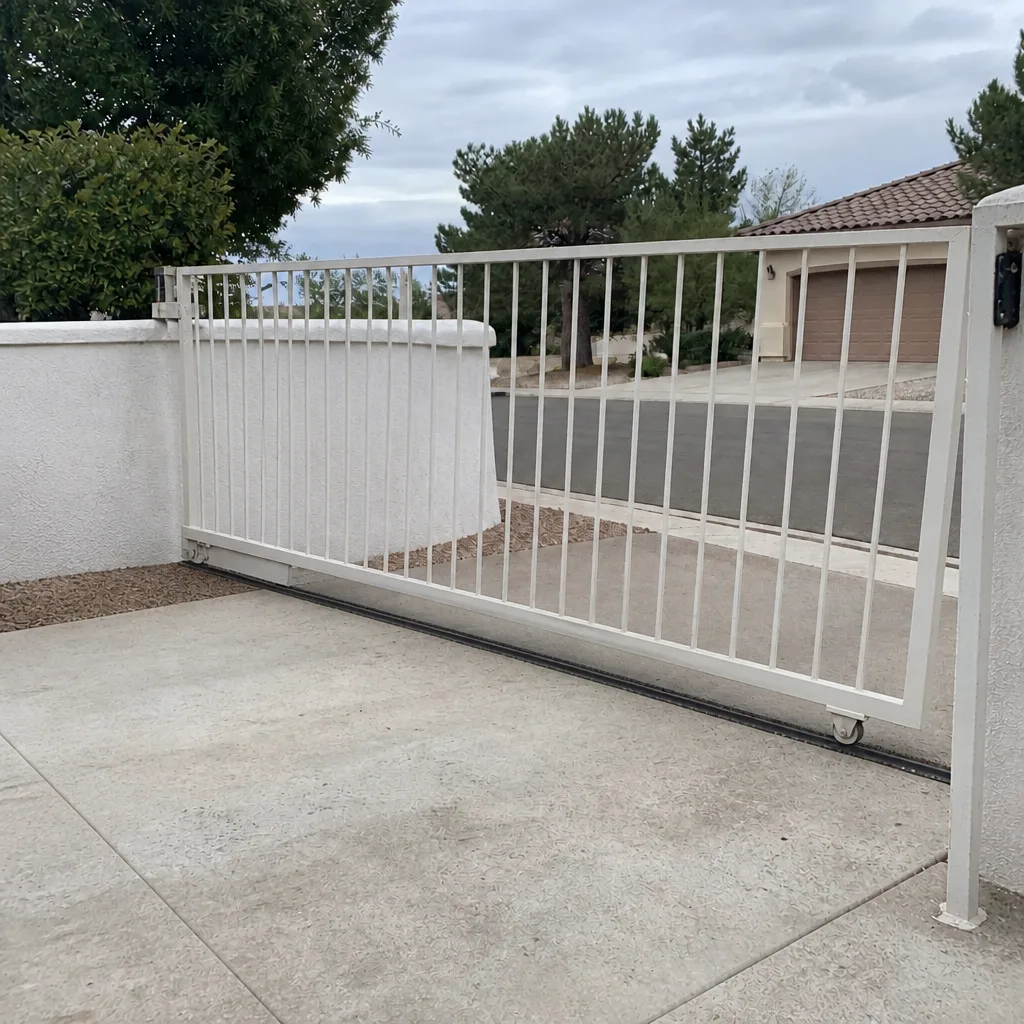
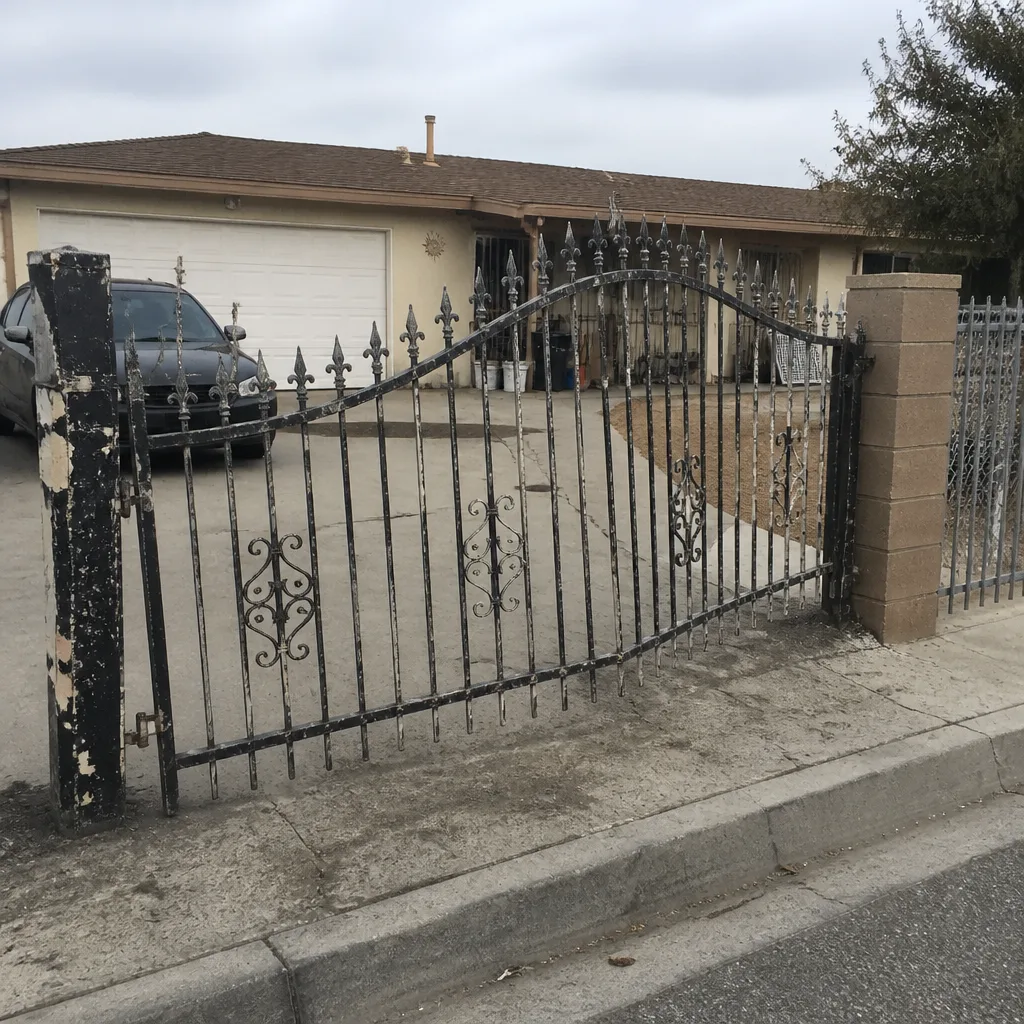
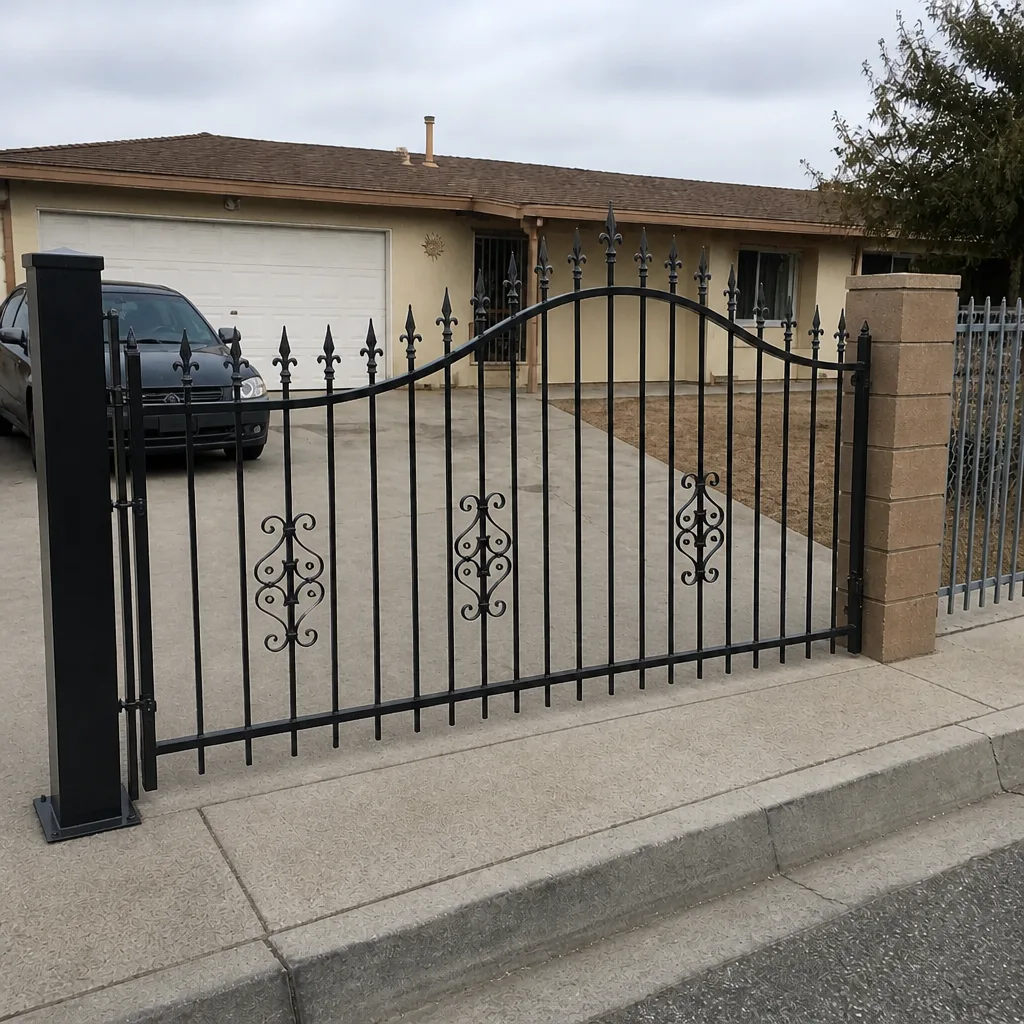
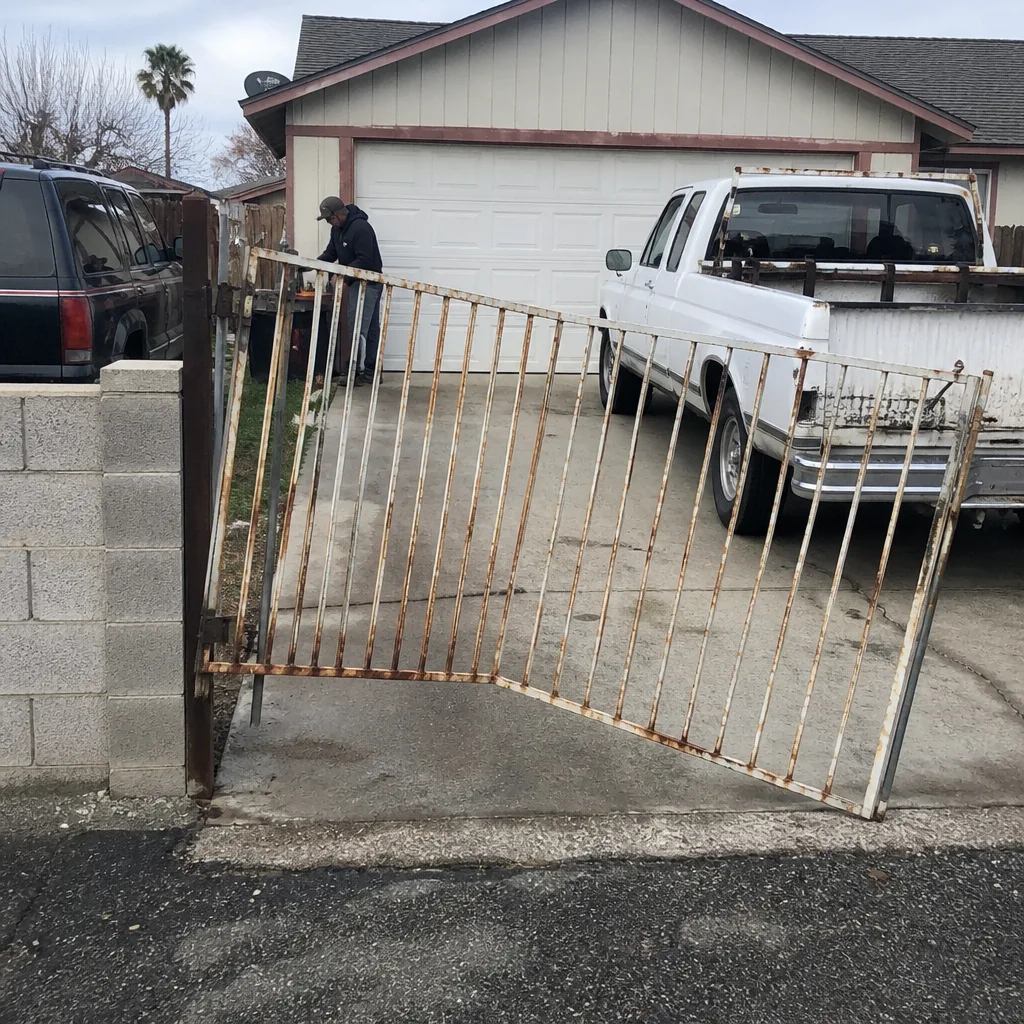
See the difference
 Before
 After
 Before
 After
 Before
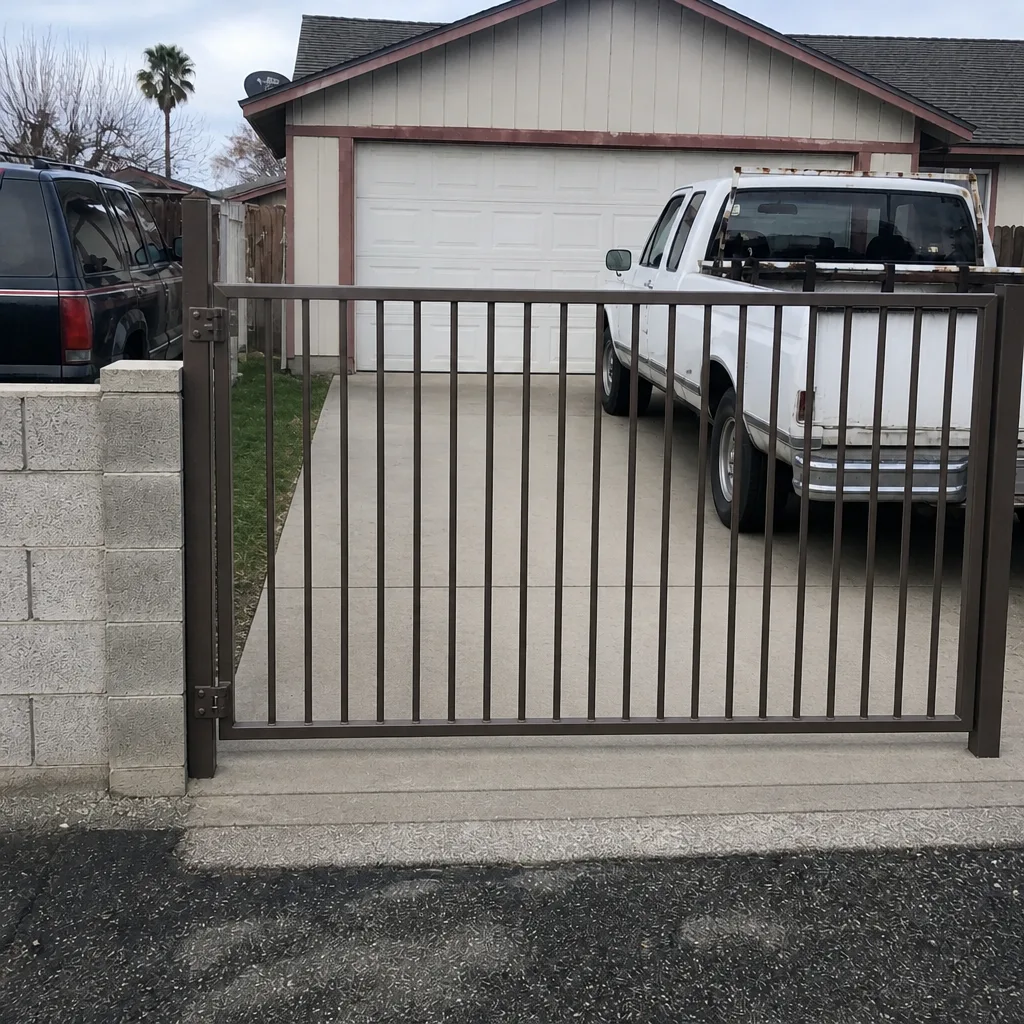 After
When to Call a Professional
Call a gate specialist when the work touches the electrical system, the operator’s safety devices or the gate’s structure, and especially when the permit status is unclear. If your gate has no inspection record and you’re planning to sell, if you’re converting a manual gate to automatic operation in Enterprise, if an inspector has flagged the force settings or entrapment protection, or if the manual release or emergency access feature has stopped working, those are all jobs that go better with someone who has done the paperwork before. The same goes for diagnosing a control board or access system that’s failing intermittently, since intermittent faults are where guesswork gets expensive.
Gate Repair Enterprise offers free estimates in Enterprise. Call (844) 423-3067. We answer 24/7. Fast dispatch from 7am to 7pm, Sunday through Friday. The price is agreed in writing before any work starts, so there’s no surprise on the invoice.
Frequently Asked Questions
Usually not. Routine repair to a manual gate, or replacement of a failed remote, receiver, battery or limit setting on an existing permitted operator, is typically treated as exempt maintenance. Anything that adds a new electrical circuit, replaces the operator with a different model or changes the safety devices usually does require a permit. Confirm the specific scope with Clark County’s building department before work starts, since the obligation sits with the property owner. Call (844) 423-3067 for a free estimate on the repair itself.
It can, and it’s one of the most overlooked title issues in Enterprise residential real estate. A buyer’s inspector who finds an automatic gate with no permit record will usually flag it, and the sale can be held up while the permitting is resolved, often under time pressure. Getting the gate permitted and the safety devices corrected before listing is far cheaper than doing it mid-transaction. Call (844) 423-3067 if you want the system assessed before you list.
They check UL 325 entrapment protection, force and sensitivity settings, the disconnect means, the wiring method and grounding, the manual release and any required signage. The electrical rough-in is inspected before it’s buried, and the final inspection is done with the gate operating so the safety devices can be demonstrated. A gate that opens reliably can still fail on a force setting or an untested safety edge. Call (844) 423-3067 for a free estimate on bringing a gate up to spec.
Generally yes for an automatic gate on a residential driveway, though the exact requirement depends on the property and the local authority. The common methods are a fire department credential or keypad, a siren-activated opening feature where accepted, a physical key or manual release operable from outside, or loop detectors configured for emergency vehicles. Confirm with the Clark County Fire Department. If the feature has been disabled, call (844) 423-3067 for a free estimate on getting it working.
You establish what’s installed, contact Clark County’s building department to learn what they require, correct the safety and electrical issues first, then submit the application and schedule the inspection. Doing the corrective work before the inspection is what avoids a repeat visit. A specialist assessment before the county visit tells you what’s non-compliant so it can be fixed in one pass. Call (844) 423-3067 for a free estimate and we’ll walk the system with you.
We handle the gate work and the documentation the inspector needs, and we can tell you what Clark County will be looking for on your specific system. The permit itself is pulled by the property owner or the licensed trade doing the electrical work, and the final sign-off is what needs to end up in your records. What we bring is the part inspectors actually evaluate: the operator, the safety devices and the settings. Call (844) 423-3067. We answer 24/7. Fast dispatch from 7am to 7pm, Sunday through Friday.
The Bottom Line
Permits for gate work in Enterprise come down to one distinction: maintenance versus alteration. Repairs that keep an existing permitted system working usually don’t need a permit. New electrical work, a different operator model, relocated safety devices or structural changes usually do. Around that core question sit the UL 325 safety checks that inspectors actually perform, the HOA architectural approval that runs alongside county permitting in Enterprise’s master-planned communities, and the fire code access requirements that a lot of existing gates quietly fail. The sequence matters more than any single step: HOA approval first, electrical inspection before the trench is closed, safety devices corrected before the final, and the paperwork filed with the title documents rather than the garage drawer. If the permit status of your gate is unclear, sort it out before a sale forces the issue. Gate Repair Enterprise works on gates and gate operators across the brands you’re likely to have, and we’re glad to look at yours.
Call (844) 423-3067 for a free estimate. We answer 24/7. Fast dispatch from 7am to 7pm, Sunday through Friday. If you’re in Enterprise and your gate needs a repair, an assessment or a full installation, we’ll quote it in writing before any work begins.
Written by the team at Gate Repair Enterprise.