
Last updated November 15, 2026
 Wrought iron
 Wood & steel frame
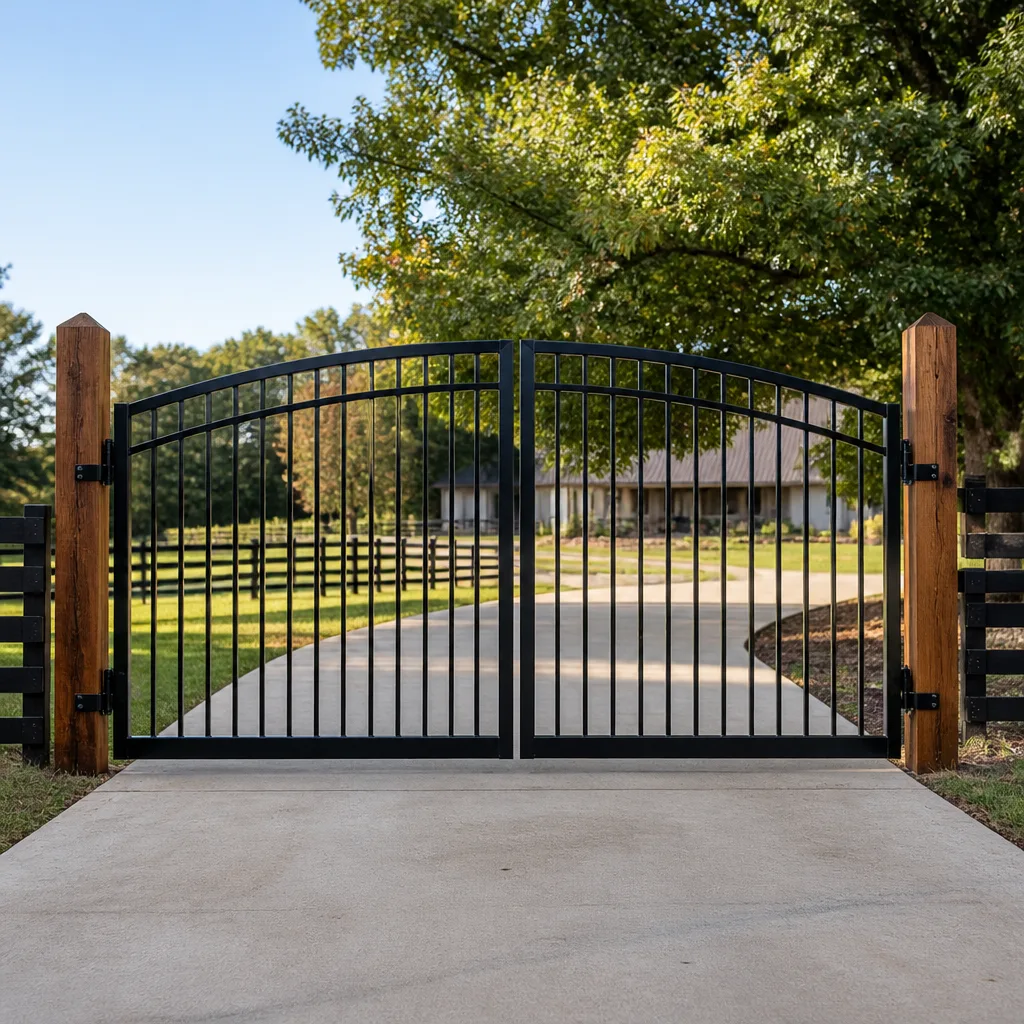 Farm & ranch
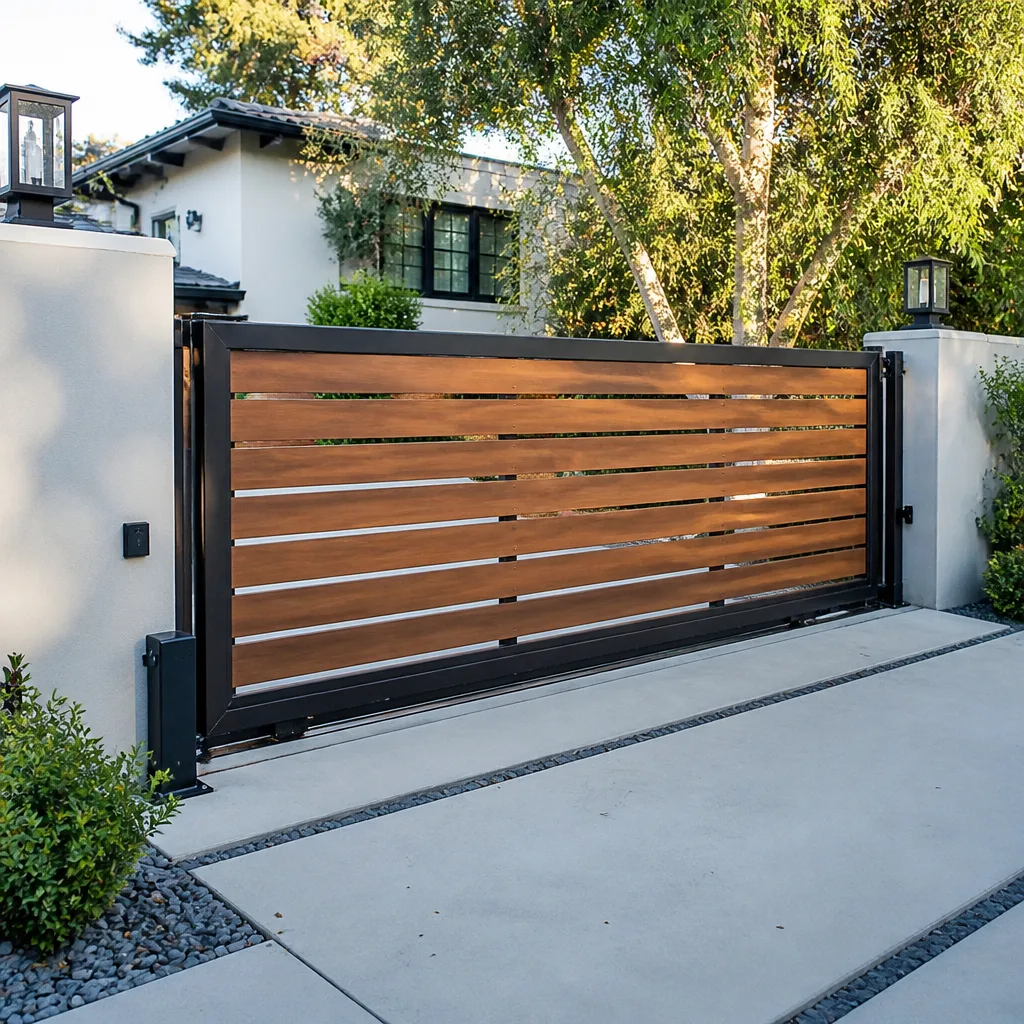 Sliding driveway gates
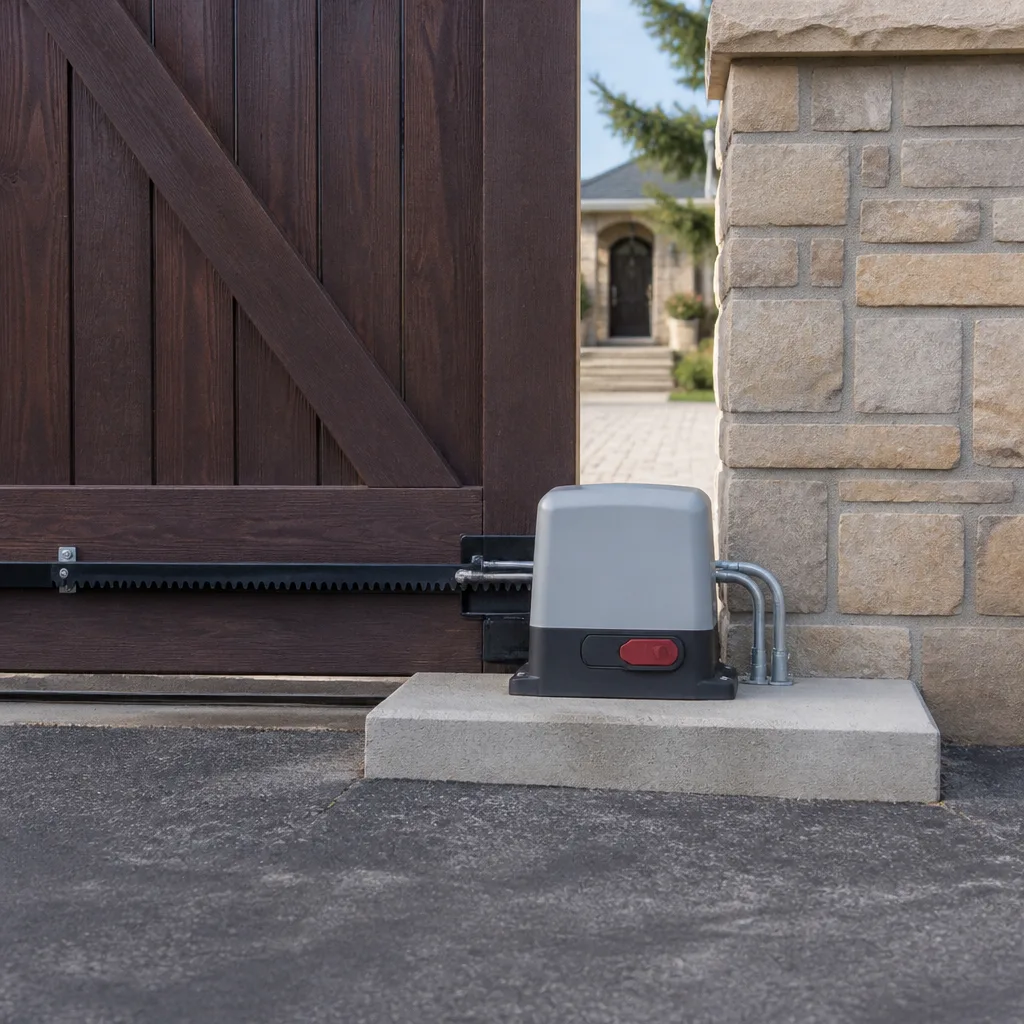 LiftMaster operators
Free on-site gate assessment - hinges, posts, and your LiftMaster or Nice gate operator checked before anything is quoted
The assessment is free and the quote is the invoice.
Get your free estimateSeasonal Gate Repair Care for Enterprise: Year-Round Homeowner’s Guide
Most seasonal gate care advice is written for places with four real seasons, and it shows. It talks about freeze-thaw, ice dams and winterizing, none of which describe what happens to a gate in Enterprise. Here in the Mojave, the enemies are different. Heat pushes metal and stresses every operator component. Late-summer monsoon storms drive water into places it was never meant to reach. And the gates that quit in September almost always showed the warning signs back in May. This guide rebuilds the seasonal calendar around what actually damages a gate in Enterprise: a pre-summer heat protocol, a monsoon moisture protocol, a post-monsoon corrosion check, and a winter routine built for big temperature swings, not deep freezes.
Quick Answer
Seasonal gate repair care in Enterprise runs on a desert calendar, not a cold-weather one. The critical window is April through May, when you check thermal expansion, operator ventilation and photo-eye alignment before June through August heat puts the system under sustained stress. Then comes a monsoon protocol in July through September (conduit seals, grounding, control board moisture), a corrosion and loop-detector assessment in October, and a winter check of hydraulic fluid viscosity and limit switches. Annual tasks like safety edge testing and battery backup load tests finish the picture.
Styles & brands we work with
- Wrought iron
- Wood & steel frame
- Farm & ranch
- Sliding driveway gates
- LiftMaster operators
Table of Contents
- The Enterprise Seasonal Calendar at a Glance
- Pre-Summer Protocol: What to Do in April and May
- Monsoon Protocol: Protecting the Gate from Late-Summer Storms
- Post-Monsoon Assessment: October’s Corrosion and Moisture Check
- Winter Protocols for Enterprise: Swings, Not Freezes
- Annual Tasks With No Seasonal Analog
- How a Seasonal Inspection Actually Goes
- Why the Brand on Your Operator Changes the Care
The Enterprise Seasonal Calendar at a Glance
A gate in Enterprise lives through four care windows a year, and each one targets a different threat. Get the timing right and you’re mostly preventing problems. Get it wrong and you’re paying for repairs you could have avoided.
- April – May (pre-summer): thermal expansion checks on aluminum and steel frames, operator ventilation inspection, and photo-eye alignment before heat shimmer begins distorting sensor paths.
- June – August (survival season): monitor, don’t overhaul. This is when you watch for the warning signs that separate a working gate from a September failure.
- July – September (monsoon): conduit seal inspection, grounding checks, and control board moisture protection against the late-summer storm pattern.
- October (post-monsoon): corrosion inspection on fasteners and welds after humidity exposure, plus loop detector wire insulation checks after ground saturation.
- December – February (winter): hydraulic fluid viscosity and limit switch calibration to handle the wide swing between cold nights and warm afternoons.
The reason this calendar matters in Enterprise is that the usual gate-care advice simply doesn’t fit. A guide written for the Midwest tells you to clear snow and break ice off the track. Around here, the track doesn’t freeze. What does happen is 115°F June-through-August operating conditions that stress every moving part at once, followed by storms that find every weak seal. Those two pressures are what this calendar is built to handle, and they’re why local timing beats generic advice.
Treat the calendar as a rhythm, not a checklist to tick once. A gate is a mechanical system with a controller, and each season works on a different part of it. Spring works on the structure and the sensors. Monsoon works on the wiring and the electronics. Fall works on the metal. Winter works on the fluid and the fine adjustments. Spread across a year, that’s a handful of short inspections rather than one big repair.
Pre-Summer Protocol: What to Do in April and May
April and May are the most valuable weeks on the entire calendar. You’re doing the work while the gate still runs, when problems are cheap to catch. By June, the heat is adding strain daily, and by September anything you skipped in spring shows up as a failure.
Thermal Expansion Checks on Aluminum and Steel
Metal grows and shrinks with temperature, and in Enterprise the daily swing is wide even before summer. Aluminum and steel frames, posts and hinges all move. When a frame has room to move, expansion is harmless. When fasteners have loosened or a weld has started to crack, that movement turns into binding, scraping and eventually a gate that won’t swing or slide cleanly. In spring, before the heat peaks, a technician checks hinge play, post stability and the frame for cracks or gaps. Catching a loose fastener in May is a few minutes of work. Catching a cracked weld in August is a different job.
Operator Ventilation Inspection
Gate operators, whether FAAC or BFT or any other brand, shed heat through their housings. In sustained heat, a motor that can’t breathe runs hotter and wears faster. Spring inspection means looking at the operator housing for dust, debris and blocked vents, and confirming the housing is intact and properly mounted. The desert adds grit that inland, cooler climates don’t, and grit in the vents is the difference between a motor that runs at design temperature and one that’s cooking itself all summer.
Photo-Eye Alignment Before Heat Shimmer
Safety photo-eyes keep the gate from closing on a person, vehicle or pet. They work on an infrared beam between two sensors. Once summer heat sets in, heat shimmer off pavement and warm air can distort the sensor path, and an alignment that was marginal in winter becomes unreliable. Aligning the eyes in spring, while conditions are stable, gives you the best chance of a clean beam through the hot months. This is also the moment to clean the lenses and check for moisture inside the sensor housings.
This is the season to also schedule any non-urgent work you’ve been putting off. If you need gate repair, spring is when it’s easiest to fit into the calendar before the heat. And if you’re weighing a replacement, getting a free estimate in Enterprise in spring means the new hardware is in and settled before the hottest stretch arrives.
Monsoon Protocol: Protecting the Gate from Late-Summer Storms
Late summer changes the threat completely. The heat that dominated June and July is still there, but now it comes with sudden, heavy rain from the annual monsoon pattern. For a gate and its operator, moisture is the bigger risk, because water reaches places that never see it the rest of the year.
Conduit Seal Inspection
Low-voltage control wiring runs through conduit between the operator, the control board, the keypad and the safety devices. Each end of each conduit run should be sealed. When a seal is missing or degraded, monsoon water follows the wire down into the housing, and the first place it lands is the electronics. A conduit seal check in early July, before the heart of the storm season, is one of the highest-value half-hours in gate care. It’s also easy to overlook because the seals are hidden until you open things up.
Grounding System Check
A properly grounded gate system gives stray current and lightning-induced surges somewhere safe to go. In a storm-heavy stretch, a corroded or loose ground connection is a real hazard to the control board. The check is simple: trace the ground path, confirm the connections are clean and tight, and look for corrosion at the bond points. In a desert climate, that connection gets baked all summer, then rained on. That combination is what weakens it.
Control Board Moisture Protection
The control board is the brain of an electric gate, and it’s the single most expensive part to replace. Preventing moisture from reaching it is cheaper than repairing it afterward. Protection means sealed conduit ends, an intact housing gasket, and a board that isn’t sitting in a low spot where water can collect. If your control board is already failing, we diagnose electric gate repair at the source rather than swapping parts and hoping. We handle the FAAC and BFT control systems that turn up on plenty of gates in Enterprise, and each brand has its own quirks when it comes to sealing and layout.
If a storm does knock your gate out, we answer 24/7. We can book you into the next opening, Sunday through Friday, 7am to 7pm, and we’re closed Saturday, as many of our customers observe a day of rest that day.
Post-Monsoon Assessment: October’s Corrosion and Moisture Check
October is the recovery month. The storms are winding down, humidity is dropping and the heat is easing. That makes October the right time to look for what the wet season left behind, before those small issues become structural.
Corrosion Inspection on Fasteners and Welds
After weeks of monsoon humidity, exposed metal tells the story. Check bolts, hinges, brackets and weld points for rust bloom, discoloration or a chalky residue. On steel gates, corrosion starts at the fasteners because they’re the first thing moisture touches and the last thing anyone thinks to clean. On aluminum gates, look at where dissimilar metals meet, since that’s where corrosion tends to start. Catching a rusted fastener in October is a matter of cleaning and replacing it. Catching it next spring can mean a welded joint that’s failing.
Loop Detector Wire Insulation Check
Saw-cut loop detectors sit in a groove in the driveway, sealed with a filler. Rain saturates the surrounding ground, and that moisture reaches the loop wire. If the insulation is cracked or the sealant has worn away, the loop becomes erratic: the gate opens for no reason, refuses to close, or freezes mid-cycle. October is the right month to test the loop and inspect the sealant, because the ground has absorbed everything it’s going to before the dry season sets in.
Ground Saturation and the Gate Foundation
A heavy monsoon season can shift the soil around gate posts. After the storms, check that posts are stable and the gate still swings or slides true to its plane. A post that’s tilted slightly is easy to miss until the gate starts dragging. October is when you catch it, and getting a post reset before things dry out and settle firm is easier than it sounds later.
Winter Protocols for Enterprise: Swings, Not Freezes
Winter in Enterprise doesn’t look like winter in most of the country. That’s the trap. Because we don’t get deep freezes, the standard winterization advice doesn’t apply, so people skip winter care entirely. But winter here has its own pattern: nights drop toward freezing, afternoons warm back up, and the swing can be forty degrees or more in a single day. That daily swing works on two systems in particular.
Hydraulic Fluid Viscosity
Some gate operators use hydraulic fluid to drive the gate. Fluid thickens as it cools, so on a cold night the operator works a little harder, and on a warm afternoon it flows more freely. A fluid check in December confirms the level and condition, and lets you catch fluid that has degraded or is the wrong weight for the local range. A neglected fluid change is a slow way to wear out a pump.
Limit Switch Calibration
Limit switches tell the operator when the gate has reached fully open or fully closed. As metal expands and contracts with the daily swing, a limit switch that was set perfectly in warm weather can be slightly off in the cold. If the gate stops short, overshoots, or reverses on its own at the ends of travel, that’s usually a calibration issue. Recalibrating in winter, when the daily range is widest, gives you a setting that holds through the swing. Winter is also when we see Linear and Viking systems need this most, since their travel settings are sensitive to the temperature range.
Hinge and Pivot Play in Cold Weather
Cold nights make metal less forgiving. A hinge with a little play is fine in July and noticeable in January. Checking hinge and pivot play in winter catches the fasteners that need snugging before a swing gate starts sagging.
Annual Tasks With No Seasonal Analog
Some of the most important gate care has nothing to do with the seasons. It’s just as relevant in January as July, which is exactly why it gets skipped. When a task doesn’t belong to any particular season, it belongs to no season unless you assign it one. Here’s how to fix that.
- Safety edge testing. The safety edge stops the gate from closing on anything in its path. Test it on a set date every year by triggering it deliberately and confirming the gate reverses. This is a safety device, and it’s the one item on this list you shouldn’t postpone.
- Battery backup load test. Operators with battery backup need the batteries tested under load, not just checked for voltage. A battery that reads fine at rest can drop under load. Test it yearly so you know the gate will open during a power cut.
- Manual release test. Every automatic gate has a manual release so you can open it by hand during a power failure or emergency. Exercise it yearly so you know it works when you need it.
- Fastener torque sweep. Walk the frame, hinges and mounts and check the fasteners. Do it once a year on a fixed date.
- Full cycle test. Run the gate through several complete open-close cycles and watch for hesitation, unusual noise or uneven travel. This catches developing problems that don’t show up in a single cycle.
We treat these as an annual inspection package and recommend homeowners in Enterprise put them on a fixed calendar date, ideally in October when the post-monsoon check is already happening. Bundling them means they actually get done. Safety edge testing and battery backup testing are the two that matter most, because both are about what happens when something goes wrong: a person in the gate’s path, or a power outage. Neither is something you want to discover in the middle of a failure.
How a Seasonal Inspection Actually Goes
A seasonal inspection in Enterprise follows the calendar above. What you’ll notice is that it’s mostly about looking and testing, not taking things apart. Here’s the general shape of a visit, so you know what to expect.
- Walk the gate and frame. We check posts, hinges, brackets and welds for play, cracking or corrosion, and confirm the gate still swings or slides true to its plane.
- Test the safety devices. Photo-eyes, safety edges and loop detectors get triggered deliberately so we know they work, not just that they’re present.
- Inspect the operator housing. We look at ventilation, seals and the housing gasket, and confirm the operator is shedding heat the way it should.
- Trace the wiring and grounding. Conduit ends, ground connections and control wiring get checked for water intrusion and corrosion.
- Run full cycles. Several complete open-close cycles reveal hesitation, unusual noise or uneven travel.
- Recommend, in writing. Anything that needs attention gets a written estimate before any work is done.
What we care about in a seasonal inspection is the gap between “the gate is working” and “the gate will keep working.” A gate can pass a single open-close cycle and still be three weeks from a failure. A technician who knows what to look for catches the signs before that happens. Our technicians have up to 8 years of experience with gate systems, and part of that experience is knowing which small changes point to real trouble.
Why the Brand on Your Operator Changes the Care
Not every gate operator ages the same way, and a seasonal care calendar is only as good as the brand-specific knowledge behind it. The control board layout, the sealing around the housing, the sensitivity of the limit switches and the type of safety devices all differ between makes. A generalist who reads the manual on the way over will miss the quirks a specialist knows.
This is where our focus pays off. We work on LiftMaster, FAAC, BFT, Linear, Viking, Ghost Controls, DoorKing, Elite and Mighty Mule, and we’re fluent in how each one fails. The thermal behavior of a FAAC operator housing is different from that of a Linear residential unit. The limit switch calibration on a Viking slide system is different from a swing gate’s. Knowing the difference is the whole point. It’s the difference between a technician who says “we don’t work on that brand” and one who knows exactly what to check first.
When you’re ready to book a seasonal check or you’ve noticed something that needs attention, we’re a phone call away. As a Gate Repair Enterprise specialist, our whole focus is gates, so a seasonal inspection is what we do, not a side service.
Common Mistakes to Avoid
- Applying a cold-climate care guide to an Enterprise gate. Freeze-thaw advice wastes your time in the desert and leaves you unready for the real threats: heat and monsoon moisture. Follow the desert calendar, not the one in a national magazine.
- Skipping spring checks because the gate “still works.” A gate that runs in May can still fail in September if the warning signs went unaddressed. Spring is the cheap time to catch problems.
- Ignoring conduit seals before the monsoon. The seals are hidden, so they’re easy to forget. An unsealed conduit run is the most common path for water to reach a control board.
- Treating winter as a non-issue because there’s no deep freeze. The forty-degree daily swing still works on hydraulic fluid and limit switches. Winter care matters even without ice.
- Postponing safety edge and battery backup tests. Because these tasks fit any season, they get put off forever. Put them on a fixed date and check them every year.
- Assuming any gate company can service your brand. A generalist working outside their wheelhouse is likely to misread the system. Match the technician to the brand on your operator.
- Ignoring loop detector sealant after the rains. Cracking sealant lets moisture reach the loop wire, and an erratic loop is one of the hardest problems to diagnose once the ground is dry.
See the difference
 Before
 After
 Before
 After
 Before
 After
When to Call a Professional
Some seasonal care is worth doing yourself: cleaning photo-eye lenses, clearing debris from the track, and visually walking the gate. But other situations call for a trained technician, and it’s better to call early than to wait. Call us if the gate reverses without being triggered, if the operator makes grinding or screeching sounds, if the gate doesn’t close all the way, or if the control board shows error codes. Call if a post shifts or the gate starts dragging, if a safety device stops working, or if water has clearly reached the housing. And if your gate has a hydraulic system or a control board you’re unsure about, don’t open it up yourself. The electronics and the moving parts are not the place for trial and error.
Gate Repair Enterprise offers free estimates in Enterprise. Call (844) 423-3067. We answer 24/7. Fast dispatch from 7am to 7pm, Sunday through Friday. We dispatch Sunday through Friday, 7am to 7pm, and we’re closed Saturday.
Frequently Asked Questions
Schedule the main inspection in April or May, before summer heat begins stressing the system. That timing gives you the best shot at catching thermal and alignment issues while the gate still runs. Then do the post-monsoon check in October, which also carries the annual tasks. Call (844) 423-3067 for a free estimate.
Yes, but not the way most guides describe it. Summer care here is mostly about heat stress: operator ventilation, thermal expansion and photo-eye alignment. Winter care is about the daily temperature swing, which affects hydraulic fluid viscosity and limit switch calibration. Neither involves ice or snow. Call us for an exact quote if you’re unsure which your gate needs.
Seasonal repair is priced per job and set by a written estimate after we look at the gate, so there’s no single number. What a typical visit covers is inspection, testing and any adjustment or repair the system needs. Every price is quoted and agreed before any work starts, so there are no surprises. Call (844) 423-3067 for an exact quote, which is free.
Moisture reaching the control board through unsealed conduit is the most common cause we see after the late-summer storms. Water follows the control wiring down into the housing and damages the electronics. The fix is sealing the conduit before the storms, which is why we make it part of the July check. If your gate has already been hit, we diagnose electric gate repair at the source. Call (844) 423-3067.
Very likely, yes. We work on LiftMaster, FAAC, BFT, Linear, Viking, Ghost Controls, DoorKing, Elite and Mighty Mule. If your operator is one of these, we know its seasonal quirks and how it ages. Call (844) 423-3067 to confirm before you book.
Same-day service is available for repair faults, and we answer the phone 24/7. Fast dispatch runs from 7am to 7pm, Sunday through Friday, closed Saturday. A call outside dispatch hours is booked into the next opening. Call (844) 423-3067 for an exact quote, and the estimate is free.
The Bottom Line
Seasonal gate care in Enterprise is not the cold-weather routine you’ll find in most national guides. It’s a desert calendar: a spring protocol for heat and alignment, a monsoon protocol for moisture and control boards, an October assessment for corrosion and loop detectors, and a winter check for fluid and limit switches. Add the annual safety edge and battery backup tests, and you’ve covered the whole year. The gate that keeps working isn’t the one that gets attention when it breaks. It’s the one that gets a spring and fall inspection before anything goes wrong.
If you want a seasonal check done right, or your gate has already started showing signs, call (844) 423-3067 for a free estimate. We’re gate specialists, not generalists, and we work on your brand.
Written by the team at Gate Repair Enterprise.