
Last updated November 15, 2026
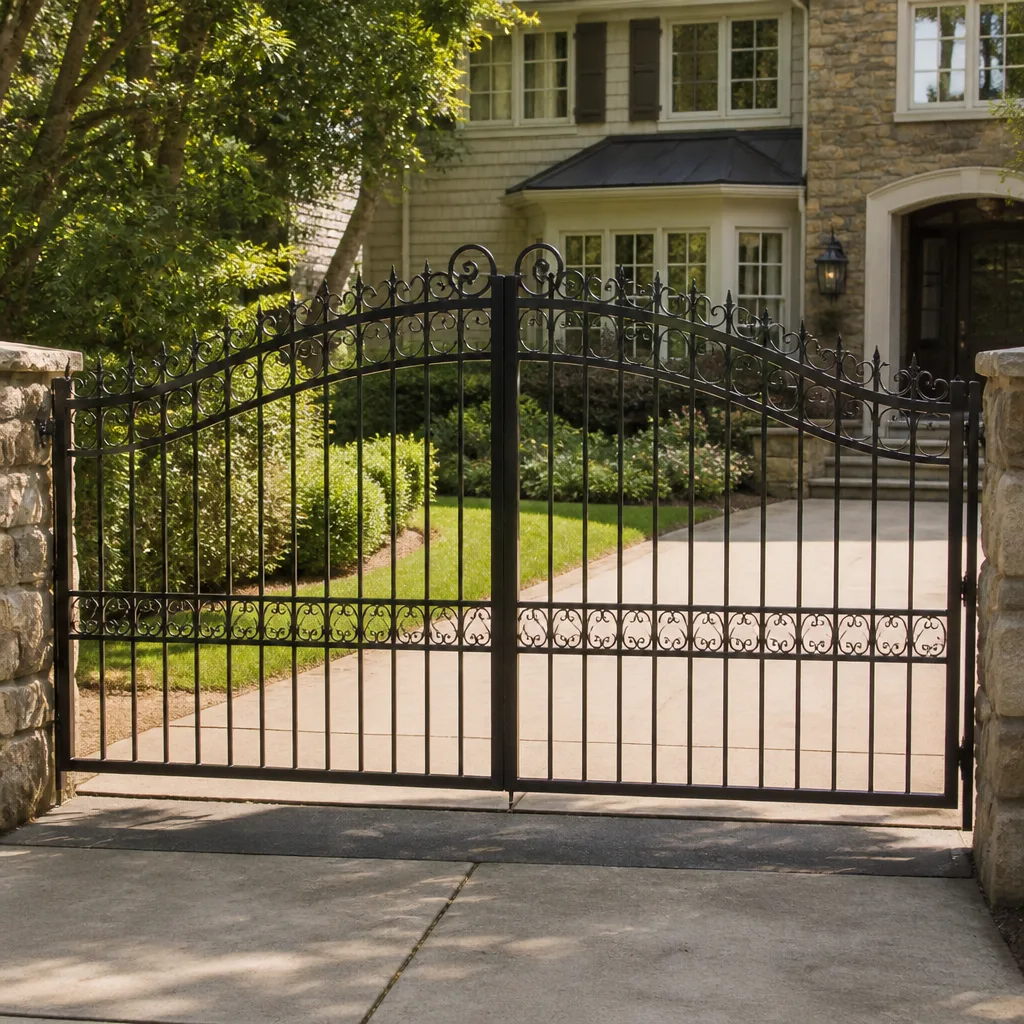 Wrought iron
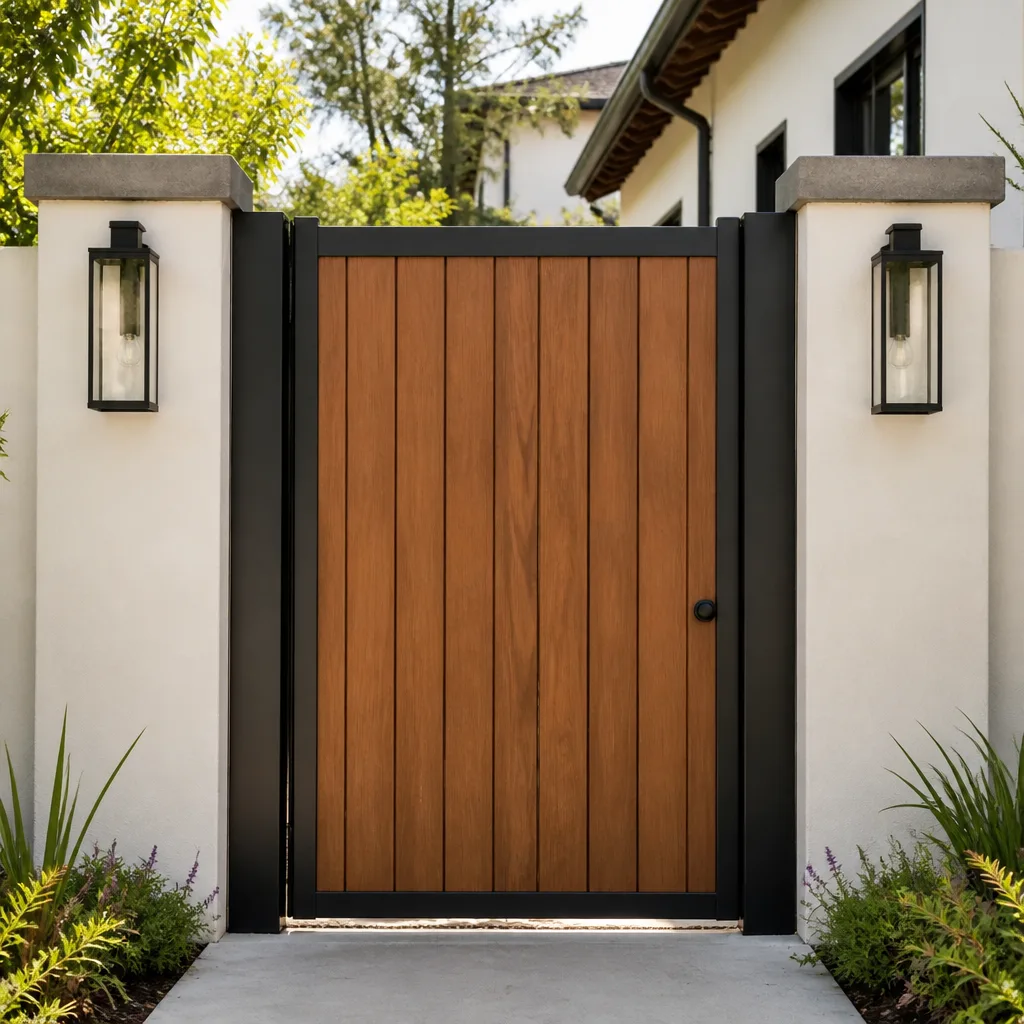 Wood & steel frame
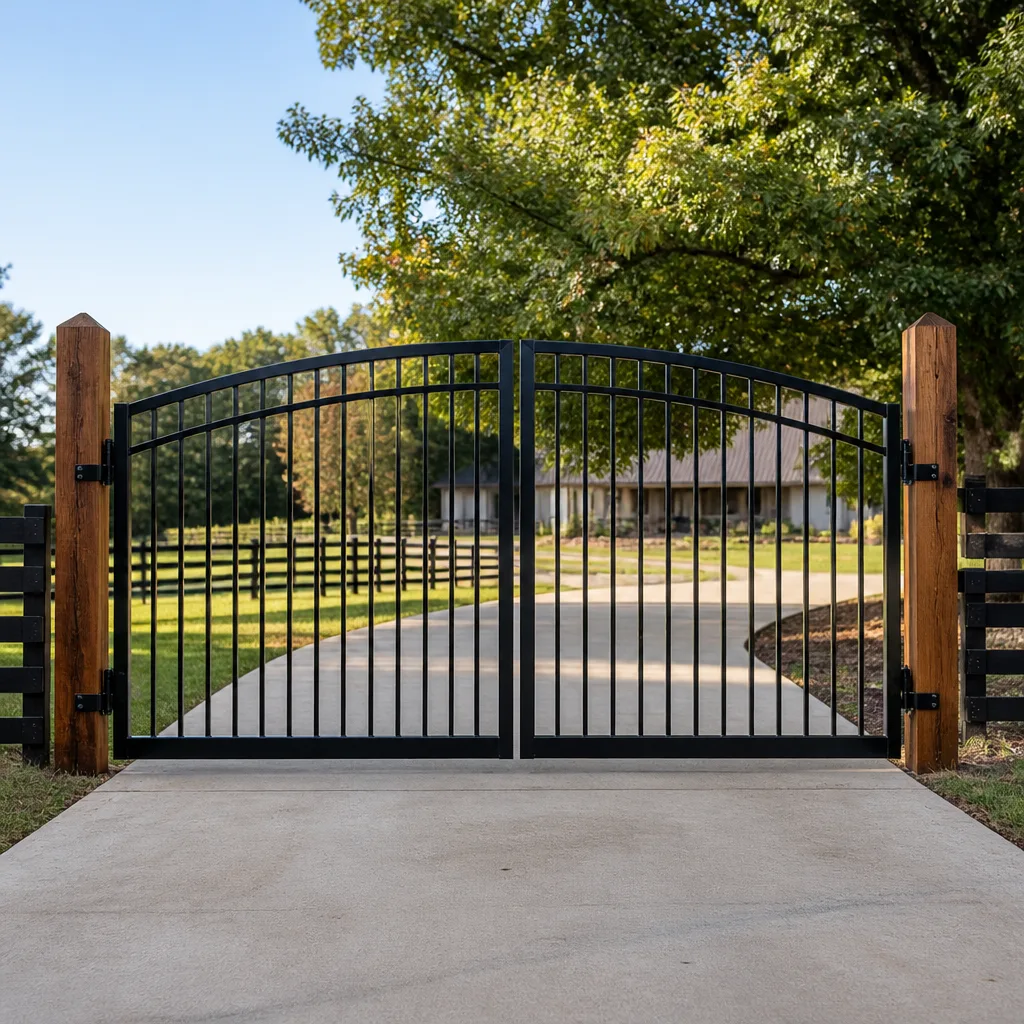 Farm & ranch
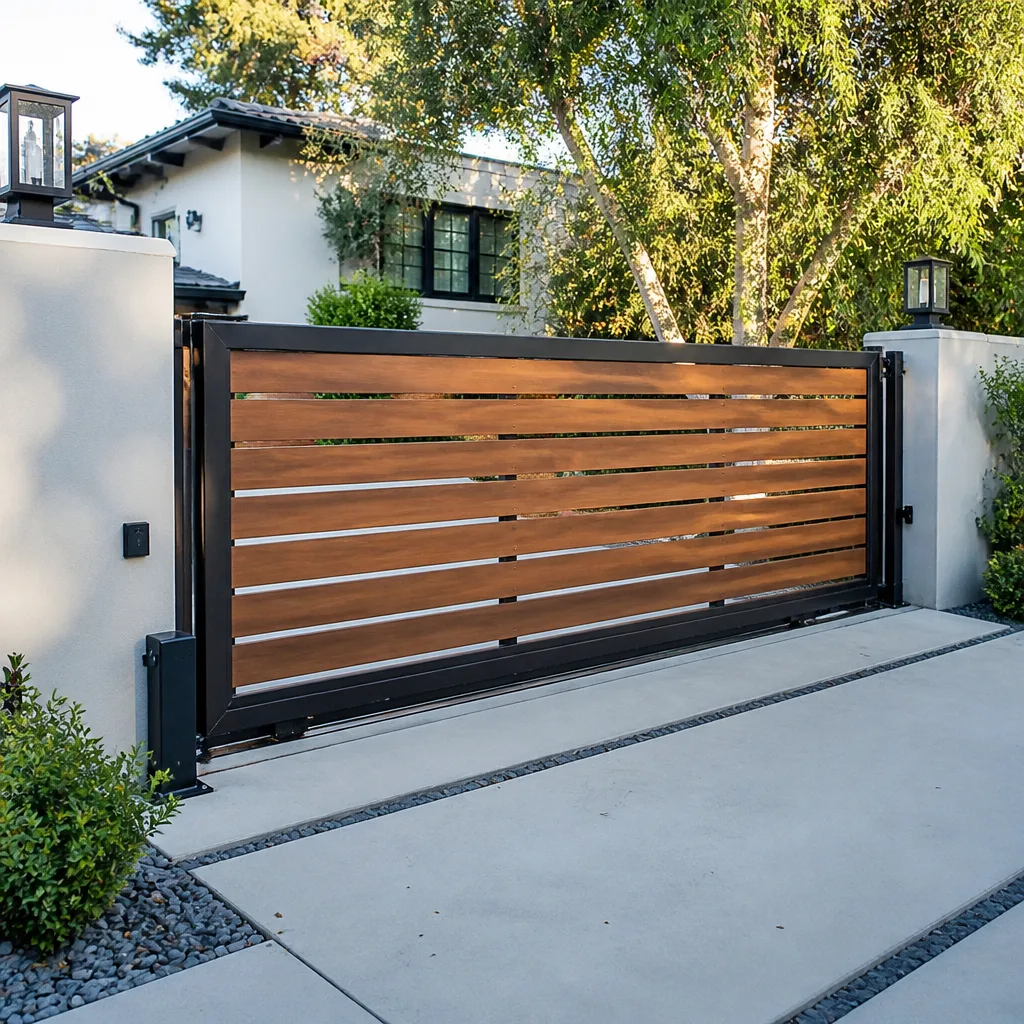 Sliding driveway gates
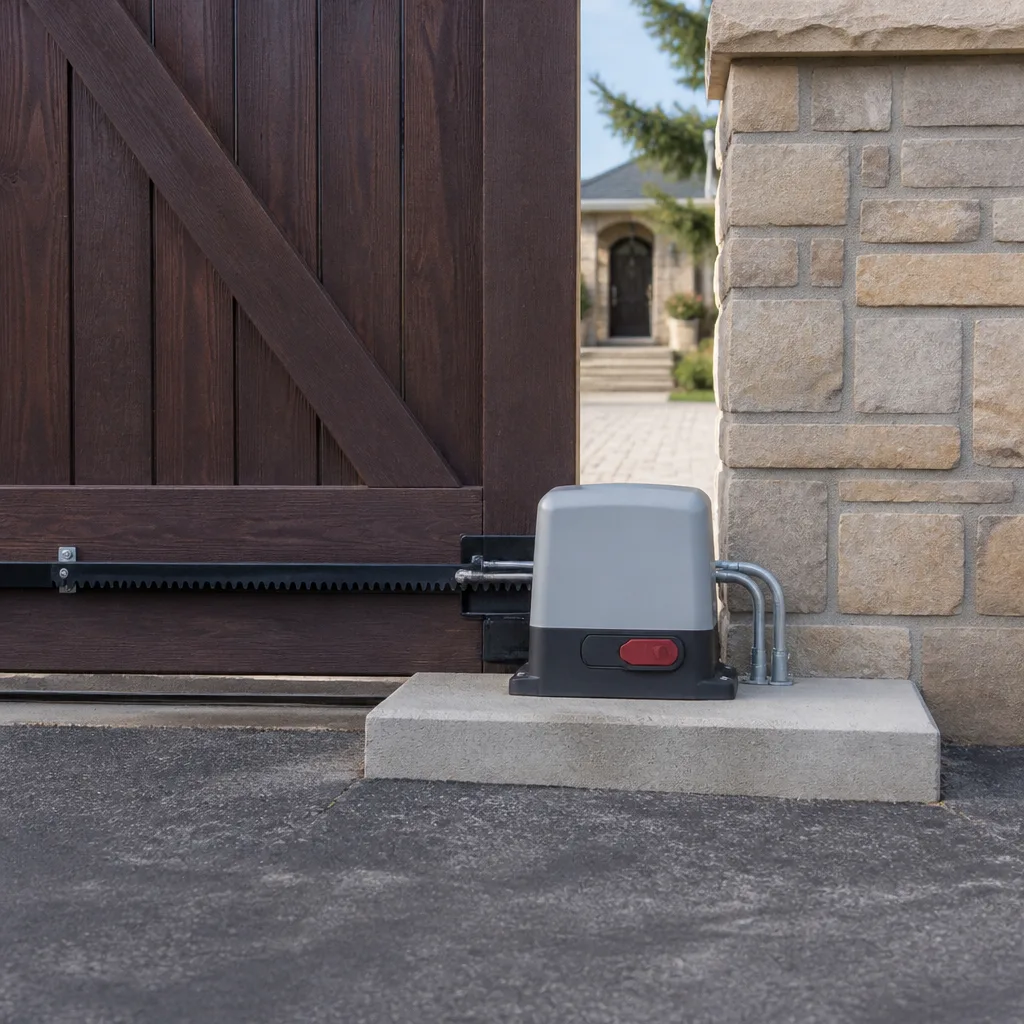 LiftMaster operators
Free on-site gate assessment - hinges, posts, and your LiftMaster or Nice gate operator checked before anything is quoted
The assessment is free and the quote is the invoice.
Get your free estimateThe Complete Guide to Gate Repair in Enterprise
Most gate repairs in Enterprise, NV get diagnosed upside down. The symptom shows up at the motor, so the motor gets replaced – and three months later the gate fails again, because the actual fault was sitting upstream in a control board, a limit switch, or a run of buried low-voltage wire the whole time. We’ve watched that cycle repeat often enough that it’s become the first thing we check for. This guide walks through how a gate actually fails in the southern Nevada desert, how to trace a symptom back to the component that caused it, and where the line sits between a repair, a refurbishment, and a full replacement. By the end you’ll understand the system well enough to ask better questions of whoever you hire in Enterprise.
Quick Answer
Gate repair in Enterprise, NV covers three connected layers: the mechanical gate itself (rollers, hinges, tracks, welds), the electrical operator and its control board, and the access-control system that tells the operator when to move. A repair is done correctly when the failing layer is identified before any parts are swapped. The desert heat in Enterprise makes this more important than in cooler climates, because hydraulic operators and aluminum frames age differently here, and a misdiagnosis costs you twice.
Styles & brands we work with
- Wrought iron
- Wood & steel frame
- Farm & ranch
- Sliding driveway gates
- LiftMaster operators
Table of Contents
- Why Diagnosis Comes Before Parts in Enterprise
- How Enterprise’s Desert Heat Breaks Gates Differently
- The Failure-Mode Decision Tree
- The Three Layers of an Electric Gate System
- Repair, Refurbishment, or Replacement: The Thresholds
- How HOA Gate Systems Differ From Residential Driveway Gates
- Manual Gates: What Wears Out First
- Working With Your Specific Brand
Why Diagnosis Comes Before Parts in Enterprise
The gate motor gets blamed for almost everything. In practice, an operator motor is one of the more durable parts of the whole assembly – it’s the components feeding and controlling it that fail first. When a gate stops opening, the motor is usually healthy and simply not receiving the command, or receiving a command it can’t act on because a limit switch is telling the board the gate is somewhere it isn’t.
This is the single most expensive misunderstanding in gate repair, and it’s not unique to Enterprise. What the local climate does is shorten the useful life of the parts that surround the motor, so those parts fail sooner and the “replace the motor” reflex gets triggered earlier here than it might somewhere milder.
Correct diagnosis follows a sequence. We don’t start at the motor:
- Walk the gate by hand. If the gate is stiff, binding, or dragging when moved manually, the mechanical problem is real and every control symptom downstream is secondary.
- Check what the control board is being told. Limit switches, safety edges, photo eyes, and loop detectors all send signals. A board that thinks the gate is obstructed will not move it.
- Confirm the board is receiving and passing power. Blown board fuses, failed capacitors, and a control transformer that isn’t outputting the right voltage all present as “dead operator.”
- Test the operator last. Once the gate moves freely and the board is healthy, a non-moving motor has nowhere left to hide.
That’s the difference between a repair and a repeat service call. When we approach gate repair this way, the part that gets replaced is the part that actually failed.
How Enterprise’s Desert Heat Breaks Gates Differently
Enterprise sits in the Las Vegas Valley, and the combination of sustained summer heat, low humidity, and intense direct sun produces failure modes that generic gate guides mostly skip. Gates age here on a schedule that doesn’t match what manufacturers’ general guidance assumes. Two systems take the worst of it.
Hydraulic Operator Seals
Hydraulic swing and slide operators rely on seal materials that stay flexible within a temperature band. In the desert, the hydraulic fluid in a sealed unit can run hotter than ambient because the operator housing itself is a metal box in direct sun. Over time, that heat cycles the seals from soft to firm and back, and they lose elasticity faster than in a shaded or milder climate. A hydraulic gate that starts to sag, slow down on one side, or leave a small oil sheen under the housing is usually showing early seal degradation. That’s a repair if caught early. Left alone, fluid loss drops the operating pressure and the motor strains against a cylinder that can’t hold its load.
Aluminum Weld Fatigue
Aluminum gates and gate frames expand and contract with daily temperature swings. In Enterprise, that swing between a cool desert morning and a hot afternoon repeats constantly, and the cyclic movement concentrates stress at weld joints and at the points where hinges, rollers, and operator brackets bolt to the frame. A hairline crack at a hinge weld on a heavy gate is a genuine structural problem – a gate panel is heavy, and a weld that fails while the gate is in motion is a safety issue, not a cosmetic one. Weld inspection belongs in any thorough diagnosis on an older gate in this climate.
Both of these are visible and both are caught by a qualified technician during a proper assessment. Neither is caught by swapping a motor.
The Failure-Mode Decision Tree
This section maps common symptoms to their actual likely cause. It’s a diagnostic reference, not a repair instruction – electric gate systems carry live power and heavy moving parts, so the work itself belongs with a trained technician. Use this to understand what’s happening and to ask informed questions.
“The gate won’t open at all.”
- No power, no lights on the board: incoming power, a tripped breaker, or a failed control transformer.
- Board is on, gate is silent, no relay click: a safety device is holding it closed – a misaligned photo eye, a damaged safety edge, or a stuck loop detector.
- Board clicks, motor hums, gate doesn’t move: a mechanical bind, a seized roller, or a failed start capacitor.
- Board clicks, motor silent: a limit switch telling the board the gate is already open, wiring to the operator, or a dead motor.
“The gate opens slowly or sounds strained.”
- Mechanical drag is the first suspect: rollers, track alignment, hinge wear. Heat makes a marginal bind worse.
- Low hydraulic fluid in a hydraulic operator presents exactly this way – slowing across the whole travel.
- Voltage drop from a long, undersized, or damaged power run causes the motor to work harder and travel slower. This one is easy to miss and often misdiagnosed as a failing motor.
“The gate reverses unexpectedly or won’t stay closed.”
- A safety edge or photo eye triggering on sun glare, misalignment, or a damaged cable.
- A limit switch that’s moved out of position or has a failing contact.
- A control board with failing relay contacts or a logic fault – more common on older boards in this heat.
- A physical obstruction – a small rock in the track, a bent roller bracket, or a warped panel from a weld crack.
Every one of these symptoms points at a different component. That’s exactly why a parts-first approach fails: you might replace a motor when the true fix is a $40 limit switch or a photo-eye realignment.
The Three Layers of an Electric Gate System
An automatic gate is a system with three layers, and they have to work together. Mechanical, electrical, and access-control. Single-trade contractors tend to work inside one layer and hand off the rest, which is where cross-layer faults slip through.
- The mechanical layer: the gate panel, hinges, rollers, track (for slide gates), posts, and the operator’s hydraulic or screw-drive mechanism.
- The electrical layer: incoming power, the control transformer, the control board, the operator motor, and the low-voltage wiring to every sensor.
- The access-control layer: keypads, remotes, loop detectors, intercoms, card readers, and telephone-entry systems that signal the operator to open.
A cross-layer fault is a failure that lives in two layers at once and presents in only one. Example: a gate that opens on the remote but not the keypad. The motor and board are fine, so a motor-focused technician sees nothing wrong. The actual fault is the keypad’s wiring in the access-control layer, or the keypad’s connection to the board’s input terminal in the electrical layer. Similarly, a safety-edge fault originates in the access-control layer but manifests as an electrical symptom (the gate won’t close).
This is why electric gate repair requires a specialist who can trace the fault across all three layers rather than starting and stopping at the boundary of one trade. It’s also why we test the whole system, not just the component that “looked” broken on arrival.
Repair, Refurbishment, or Replacement: The Thresholds
There’s a lot of room between “fix the broken part” and “install a new gate,” and the right answer depends on the condition of the whole assembly, not just the failed component. Here are the thresholds we use:
Repair
- The gate structure is sound – no significant weld cracks, no bent frame, no compromised posts.
- The operator is functioning except for the specific failed component.
- The control board is healthy or repairable, and the wiring runs are intact.
- Isolated failures: one bad roller, one misaligned photo eye, one control board fuse, one limit switch.
Refurbishment
- The gate structure is sound but the mechanical wear is broad – multiple worn rollers, hinges at end of life, a tired track on a slide gate.
- The operator’s core is healthy but its seals, bushings, or a control board need replacement.
- Electrical and access-control wiring is intact and safe but aged, and the connectors or terminals need refreshing.
- The customer wants to extend the life of a well-built gate that’s simply worn in more than one place.
Replacement
- Structural failure is present – serious weld cracks in load-bearing joints, bent frame sections, or posts that are failing at the footing.
- The operator is past economic repair, or a replacement part for a discontinued model is no longer available.
- The system’s wiring and control gear don’t meet modern requirements and the cost of bringing it up to date exceeds a new installation.
- The gate no longer fits its function – a wider opening, a heavier panel, or a duty cycle the current operator can’t sustain.
The important part is that replacement should follow a genuine repair assessment, not replace one. When a straight replacement is right, we handle both repair and installation, so there’s no separate installer to source after the assessment. When a repair is right, we say so – and we specify the actual failing component. That’s the difference between a fix and a repeat call.
How HOA Gate Systems Differ From Residential Driveway Gates
An HOA or community entry gate is structurally different from a driveway gate, and it needs a different diagnostic approach. A residential gate serves one property; an HOA gate serves dozens of vehicles a day, and its failure affects everyone’s access, not just one household’s.
- Duty cycle is far higher. The operator cycles many times more per day than a residence, so motor wear, roller wear, and hydraulic seal wear all accelerate. Enterprise HOA gates, in this heat, run operators harder than the manufacturers’ guidance assumes for residential use.
- Access control is the primary system. The gate is opened by residents, guests, delivery drivers, and emergency vehicles through a coordinated set of keypads, dialers, telephone-entry units, and loop detectors. This layer is more complex and is where a large share of HOA gate faults actually originate.
- A single-point failure blocks everybody. An HOA gate stuck closed is a community problem and often requires a prompt response that a residential gate wouldn’t. We answer 24/7, with fast dispatch from 7am to 7pm.
- Safety edges and detectors are critical. A community gate interacting with pedestrians, cyclists, and children needs its safety edges and loop detectors working, and a fault here should be treated as urgent.
- Worn welds are a structural concern. The cyclic movement and high cycles on an HOA gate make weld fatigue at operator mounts and hinge points a serious consideration. This is a safety issue, not a cosmetic one.
Property managers in Enterprise can call (844) 423-3067 and we’ll diagnose at the source – mechanical, electrical, and access-control – before anyone touches the hardware.
Manual Gates: What Wears Out First
Not every gate in Enterprise is powered. Manual swing gates and sliding gates have their own wear pattern, and it’s often simpler to diagnose because there’s no control board and no wiring to trace.
- Hinges on swing gates. Hinges are the most common manual-gate failure. A sagging gate usually has worn or loose hinge bearings, or a post that’s moved. Diagnosis: lift the gate at the outer edge and watch for play at the hinge.
- Rollers and track on sliding gates. Rollers wear, track sections deform, and the gate starts to drag. A gate that’s hard to slide on a cool morning and worse in the afternoon heat is showing you a roller or track problem.
- Latch and strike alignment. A latch that won’t catch is usually a hinge or post problem dragging the gate out of alignment, not a latch problem.
- Weld joints. The same cyclic expansion and contraction that wears powered-gate welds affects manual gates. A crack at a hinge or latch weld should be treated as a structural repair.
Manual gate repair is straightforward when the trouble is isolated and the structure is sound. It becomes a structural repair the moment a weld, a post footing, or a frame section is involved.
Working With Your Specific Brand
Gate operators and their control boards are brand-specific in ways that matter. The same physical symptom can be a loose sensor on one system and a control board fault on another, and the diagnostic steps are different. A technician who mostly works on other brands will spend time re-learning your system on your time. We work on your brand – the major gate and operator brands including Linear, Viking, Ghost Controls, and DoorKing – and our technicians are fluent in the quirks of each.
- Linear systems are common on residential drives, and their control logic and accessory wiring reward someone familiar with how the brand handles safety inputs.
- Viking operators show up on both residential and light-commercial gates; their board behavior on limit and safety faults has its own patterns.
- Ghost Controls systems are DIY-friendly to install, but diagnosing a stalled or reversing gate on them means understanding their specific input handling.
- DoorKing systems are common on HOA and commercial entry gates and have a richer access-control layer, with dialers and loop detectors that require a specialist.
When you need the right fix for your specific system, brand fluency is the difference between a fast diagnosis and a rebuild-by-guesswork. Call (844) 423-3067 for a free estimate.
Common Mistakes to Avoid
- Replacing the motor first. An operator motor is durable; it’s usually the wiring, the control board, or a safety input that failed. A motor swap that doesn’t fix the fault is money spent on the wrong part, and the real fault is still in the system.
- Ignoring the mechanical symptoms. A gate that’s binding or dragging is telling you the problem is mechanical. Replacing a control board on a stiff gate is a recipe for the board failing again.
- Bypassing a safety edge or photo eye. A safety device that’s holding the gate closed is doing its job. Disabling it, even temporarily, is unsafe – the gate can close on a person or vehicle.
- Overlooking aluminum weld cracks. Enterprise’s daily temperature swings stress gate welds. A hairline crack at a hinge or operator mount that gets painted over will eventually fail under load.
- Letting a hydraulic seal leak go. A small oil sheen under a hydraulic housing is early seal wear. Left alone, fluid loss strains the operator and shortens its life.
- Hiring a general contractor for an electric gate. A cross-layer fault on the access-control side often gets missed by someone whose primary experience is elsewhere, and you pay for a second diagnosis.
- Treating an HOA gate like a driveway gate. A community gate’s duty cycle and access-control complexity are different, and a diagnostic that assumes residential use misses the most likely culprits.
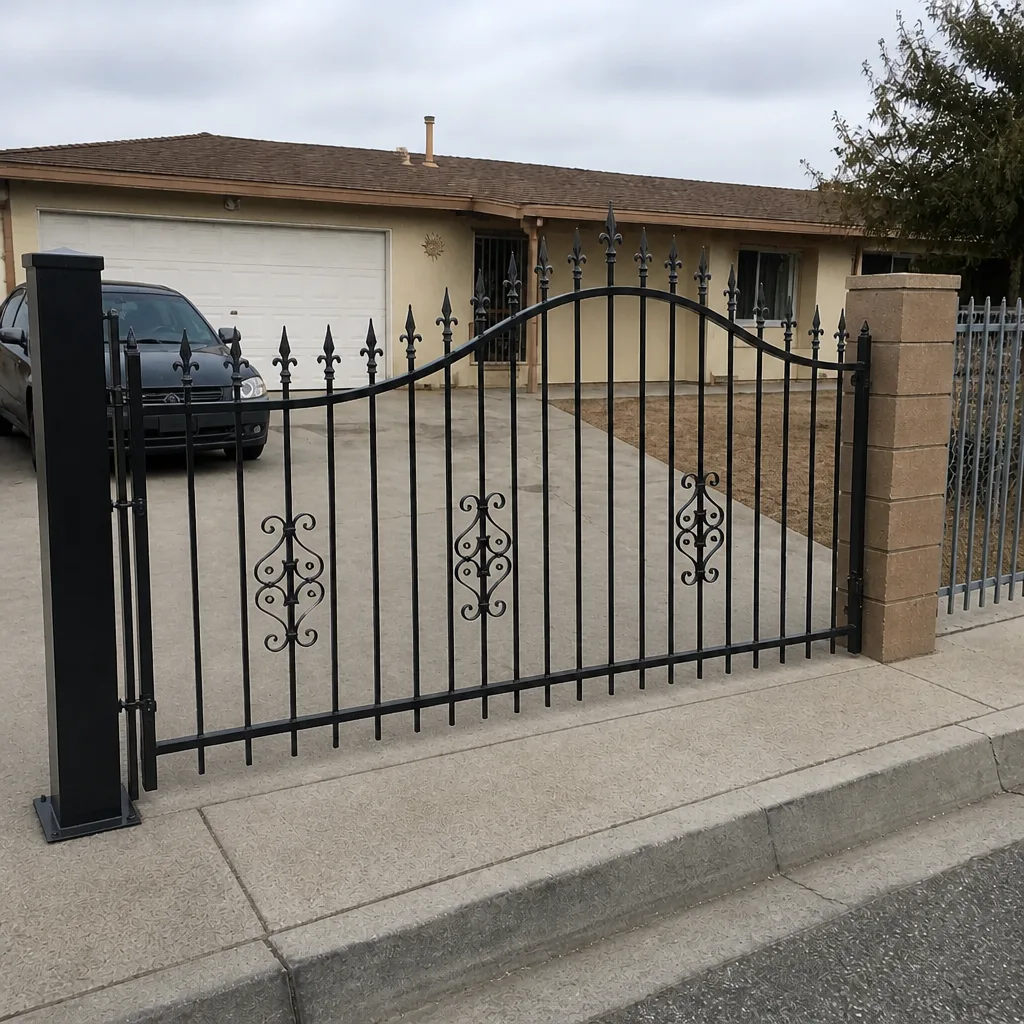
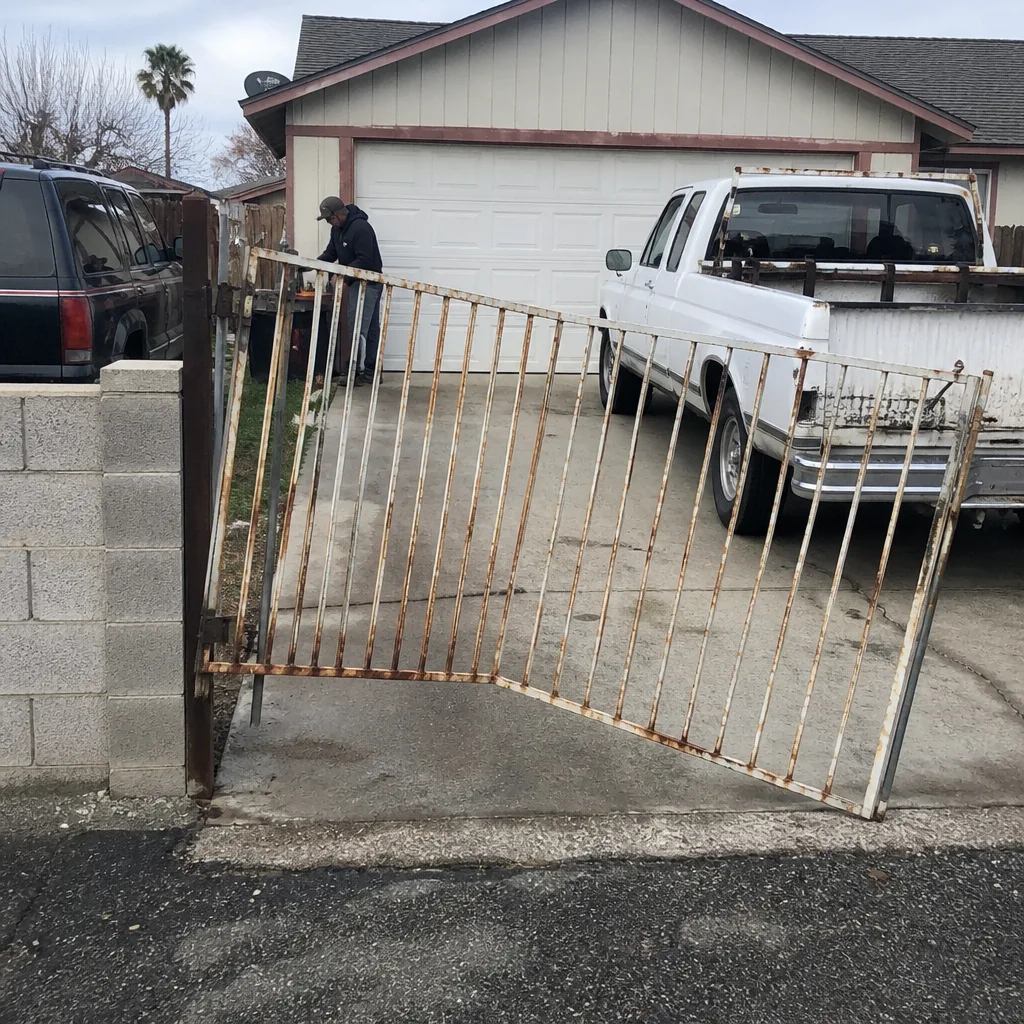
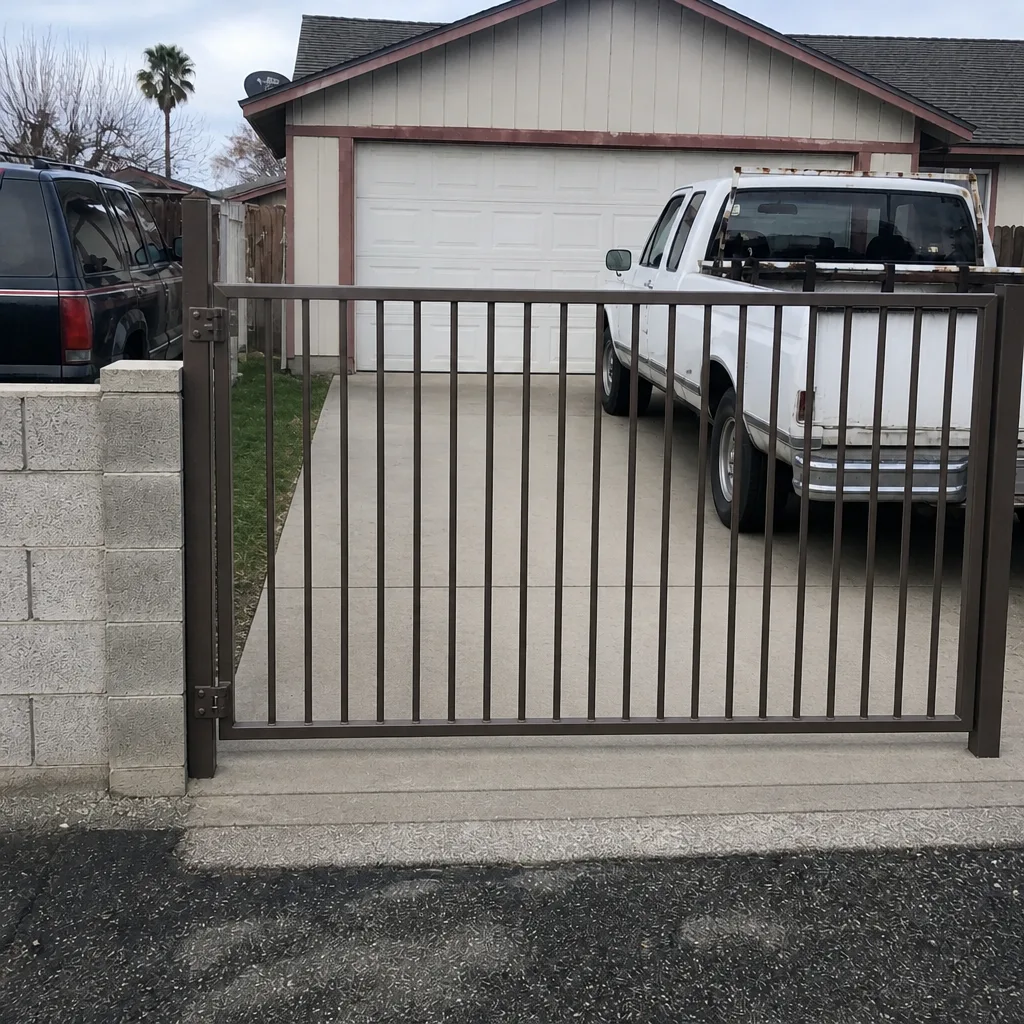
See the difference
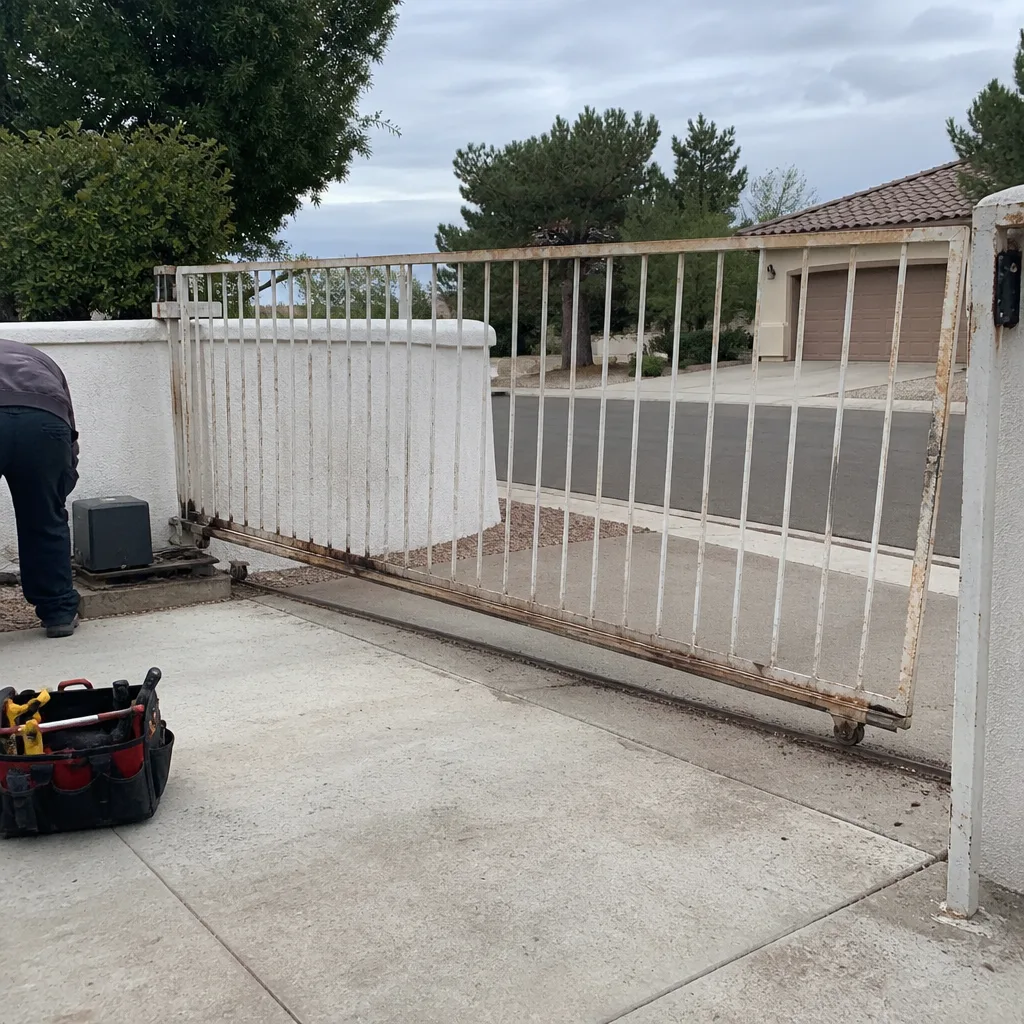 Before
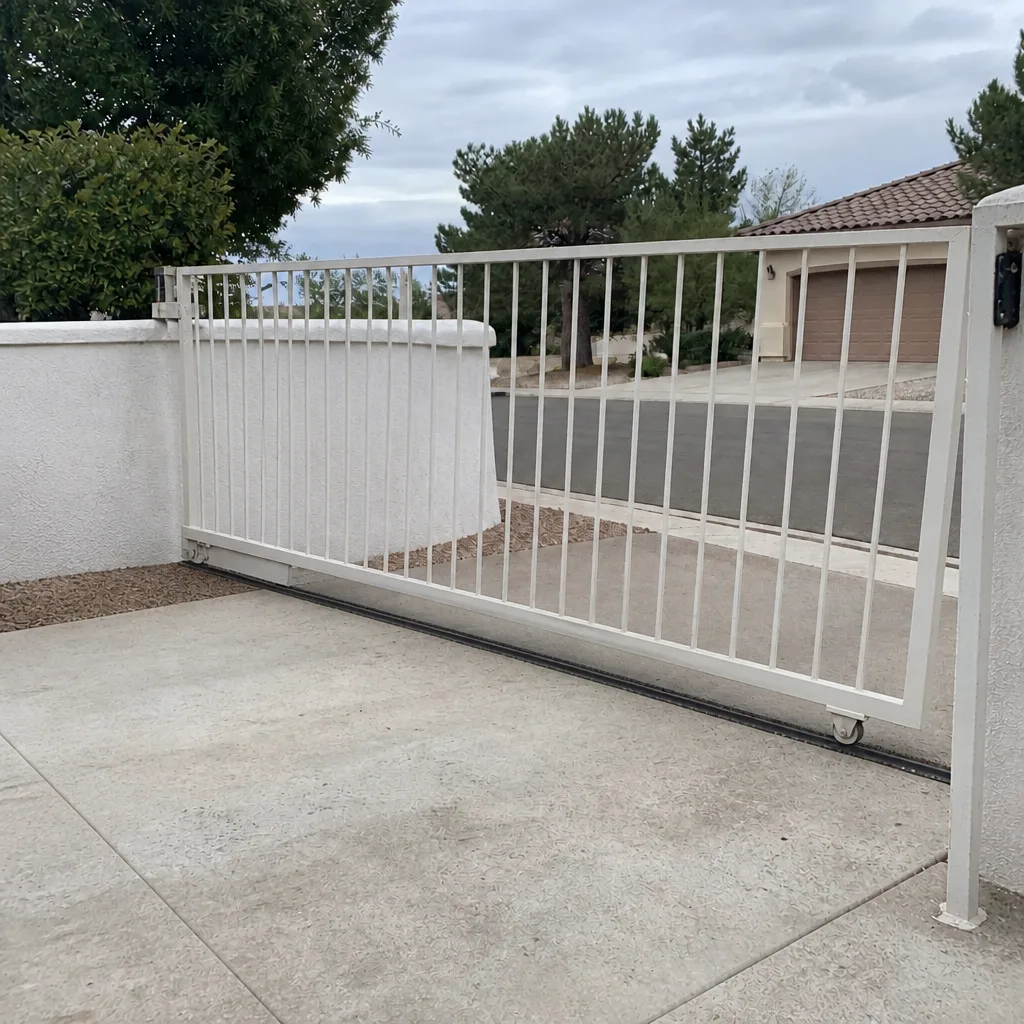 After
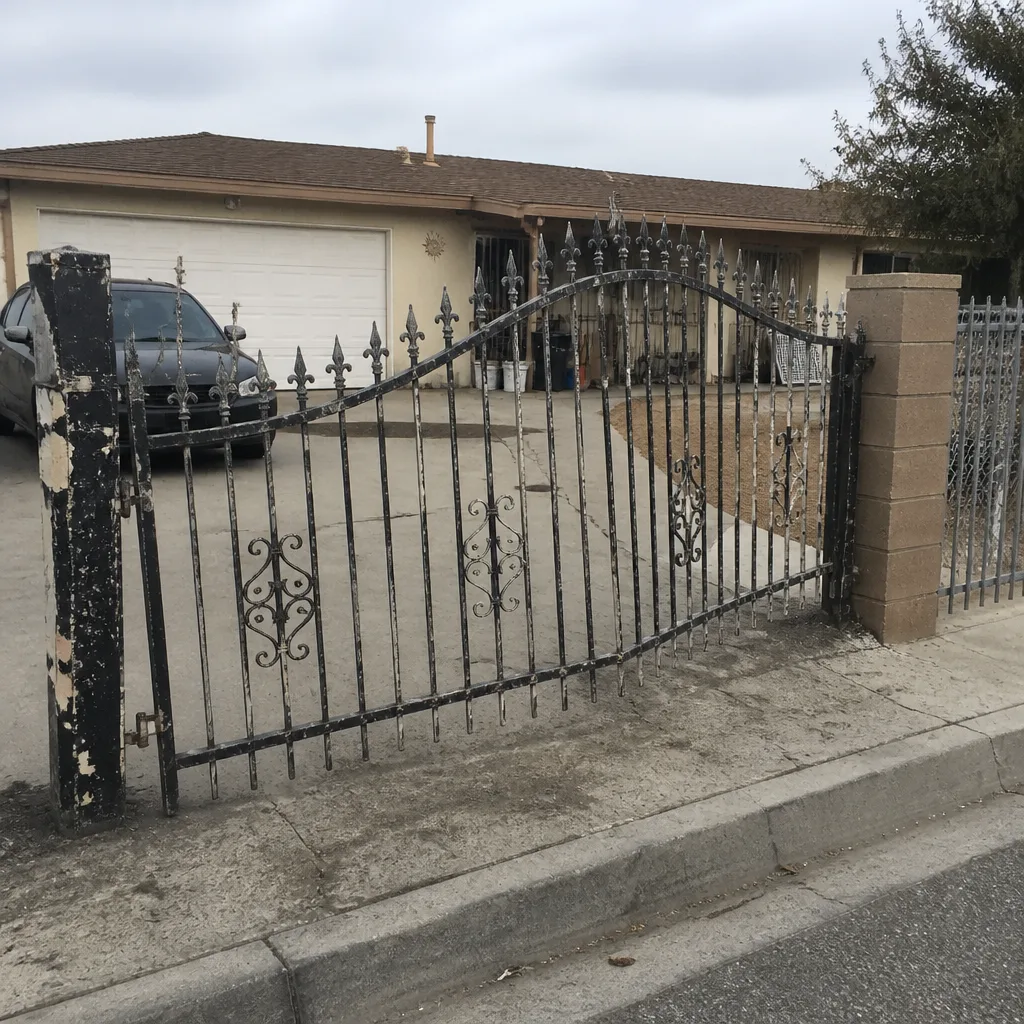 Before
 After
 Before
 After
When to Call a Professional
Call a specialist when the gate won’t open reliably, when it reverses on its own, when the operator makes noise or runs hot, or when you see a crack at a weld or a joint. Call when the gate is holding up a community entrance, or when your manual gate is binding and you’re not sure whether it’s a roller or a post footing. Call when hydraulic fluid is showing under the operator. Call when a contractor has already replaced a motor and the gate still doesn’t work – that’s a cross-layer fault that deserves a proper diagnosis. For Enterprise homeowners and property managers who want the actual failure identified before any parts are sold, we offer free estimates – call (844) 423-3067, and we’ll trace the symptom to the source. We answer 24/7, with fast dispatch from 7am to 7pm, Sunday through Friday.
Frequently Asked Questions
The cost depends on which layer failed and which components need replacing, and the final price is set by a written estimate after we’ve diagnosed the system. Repairs range from a single sensor realignment to a hydraulic seal replacement or a control board swap, and each is priced per job. Call (844) 423-3067 for an exact quote – estimates are free.
In many cases, yes – we answer 24/7, with fast dispatch from 7am to 7pm, Sunday through Friday, and we work same-day where schedules allow. Repairs to a single failed component are usually straightforward to schedule. Call (844) 423-3067 and we’ll confirm the next available opening.
We work on the major gate and operator brands, including Linear, Viking, Ghost Controls, and DoorKing. Brand fluency matters because the same symptom can have a different cause on different systems, and we check that before diagnosing. Call (844) 423-3067 for a free estimate on your specific system.
Neither, usually. The motor is often the most durable part of the assembly, and the real fault sits upstream in the control board, limit switches, wiring, or a binding mechanical component. A proper diagnosis of all three layers – mechanical, electrical, and access-control – is what tells us whether a repair or a replacement is right. Call (844) 423-3067 for an expert diagnosis.
Yes. HOA and community entry gates have a different structure from residential driveway gates – higher duty cycles, more complex access control, and critical safety edges – and we diagnose them as community systems rather than driveway gates. Property managers in Enterprise can call (844) 423-3067 for a free estimate and a written price.
In Enterprise’s desert heat, the most common failure points are hydraulic operator seals, aluminum weld joints at hinges and operator mounts, and control boards that struggle to pass correct power as their components age. Mechanical bind from worn rollers and hinges runs a close fourth, and it’s often the true cause when a control symptom appears. Call (844) 423-3067 for a proper diagnosis that identifies which one is behind your gate’s symptom.
The Bottom Line
Most gate failures come down to a small set of root causes, and the diagnosis is where the lasting fix lives. The motor usually isn’t the fault. The failing component is more often a control board, a limit switch, a safety device, or a mechanical bind – and in Enterprise’s desert heat, hydraulic seal wear and aluminum weld fatigue are real failure modes to watch. The right repair depends on which layer is actually failing: mechanical, electrical, or access-control. If you want a repair that outlasts a repeat service call, start with a proper diagnosis and work outward. That’s how we handle Enterprise gate work, from a single sensor to a full installation.
Contact Us
If your gate is failing in Enterprise, it’s worth having it diagnosed properly before you spend on parts. Gate Repair Enterprise handles gate repair, electric gate repair, and installation, and we work on the major gate and operator brands. Call (844) 423-3067 for a free estimate and a written price before any work starts. Estimates are free.
Written by the team at Gate Repair Enterprise.