
Last updated November 15, 2026
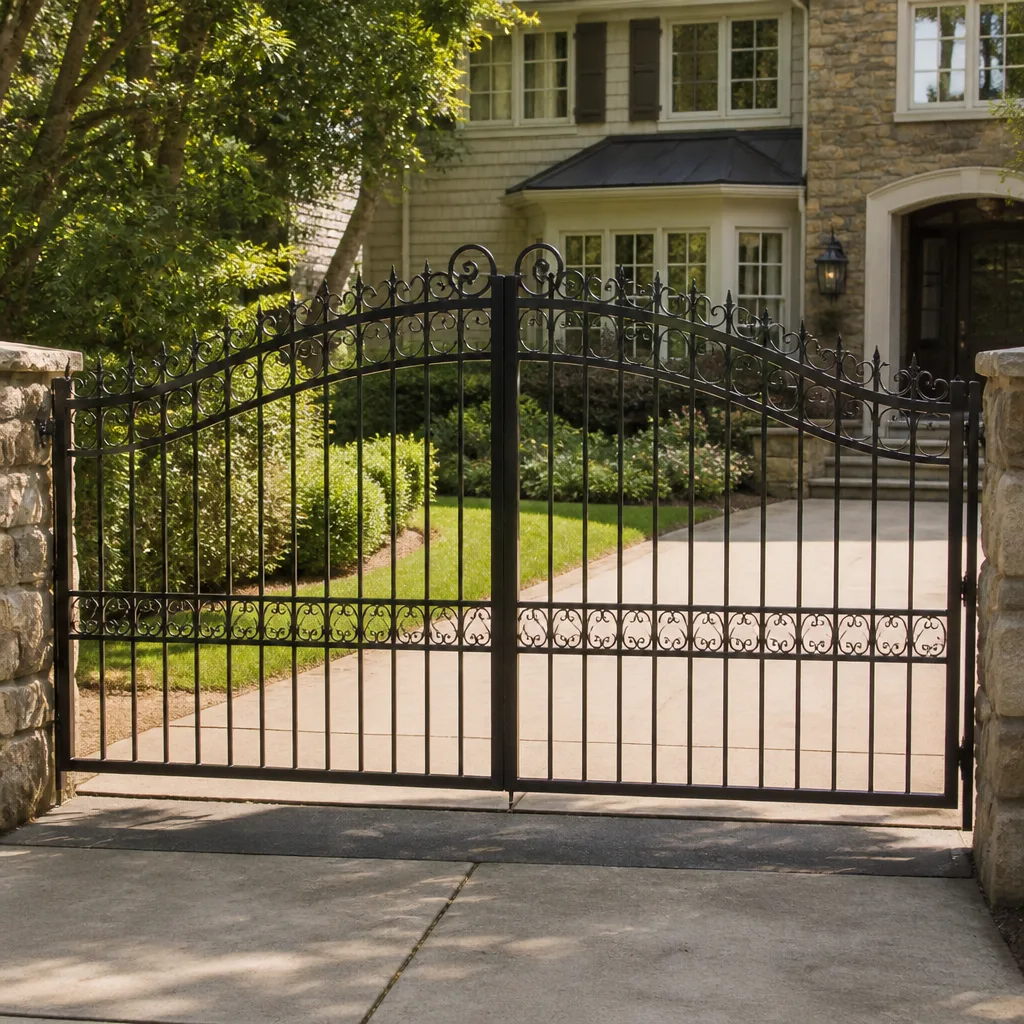 Wrought iron
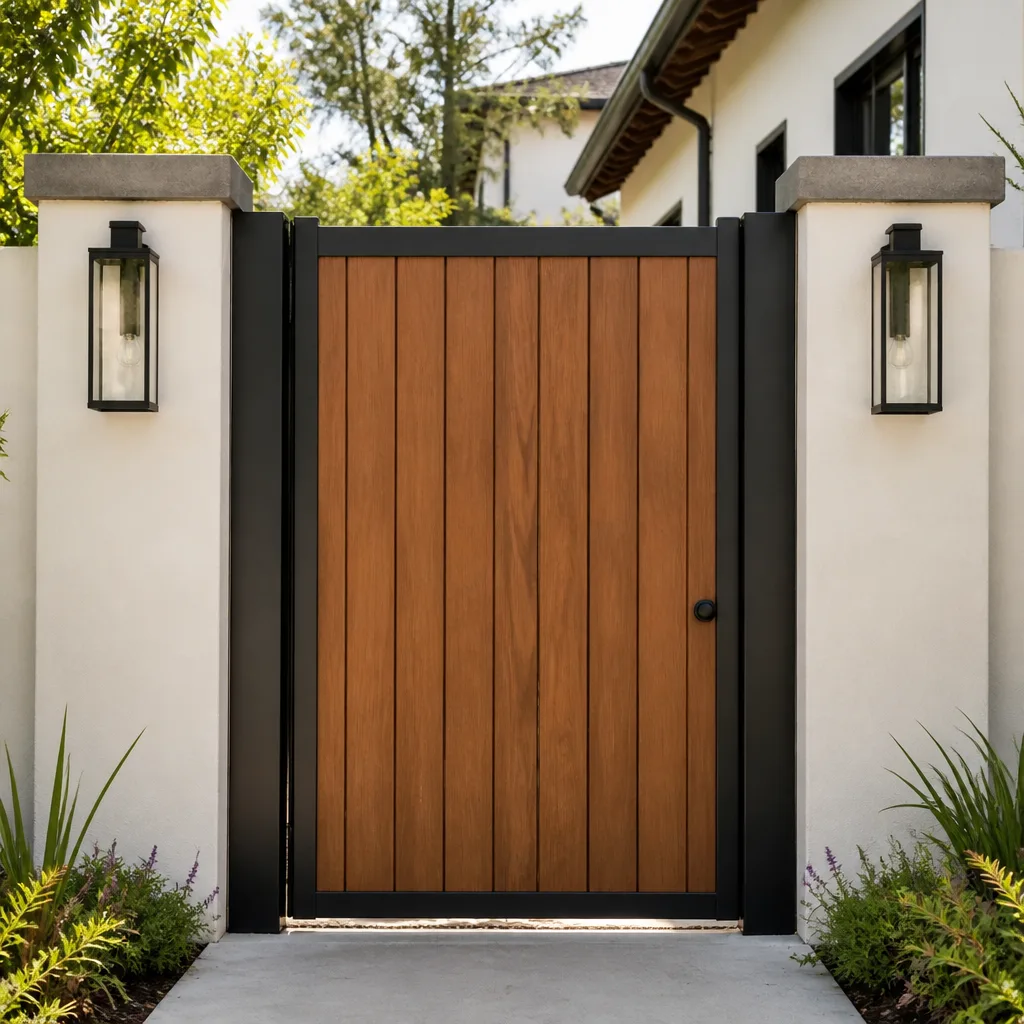 Wood & steel frame
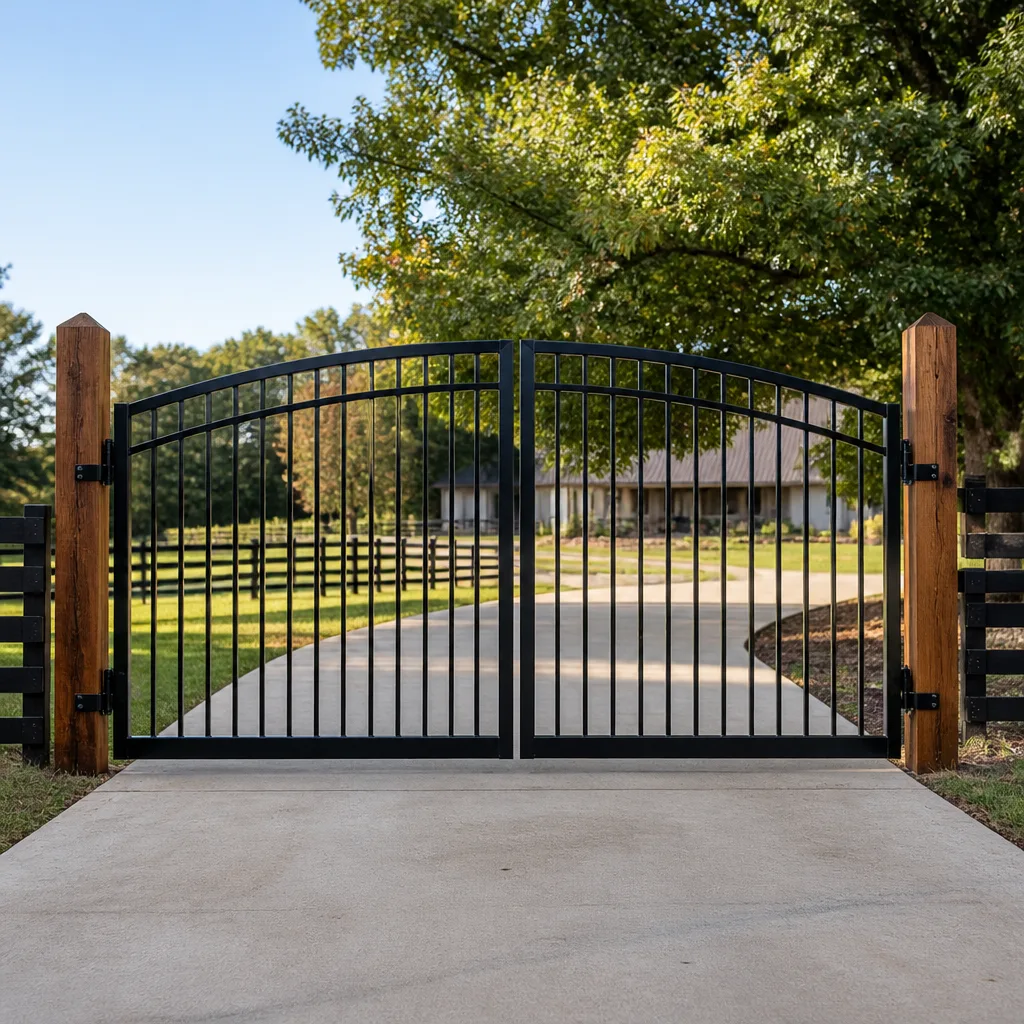 Farm & ranch
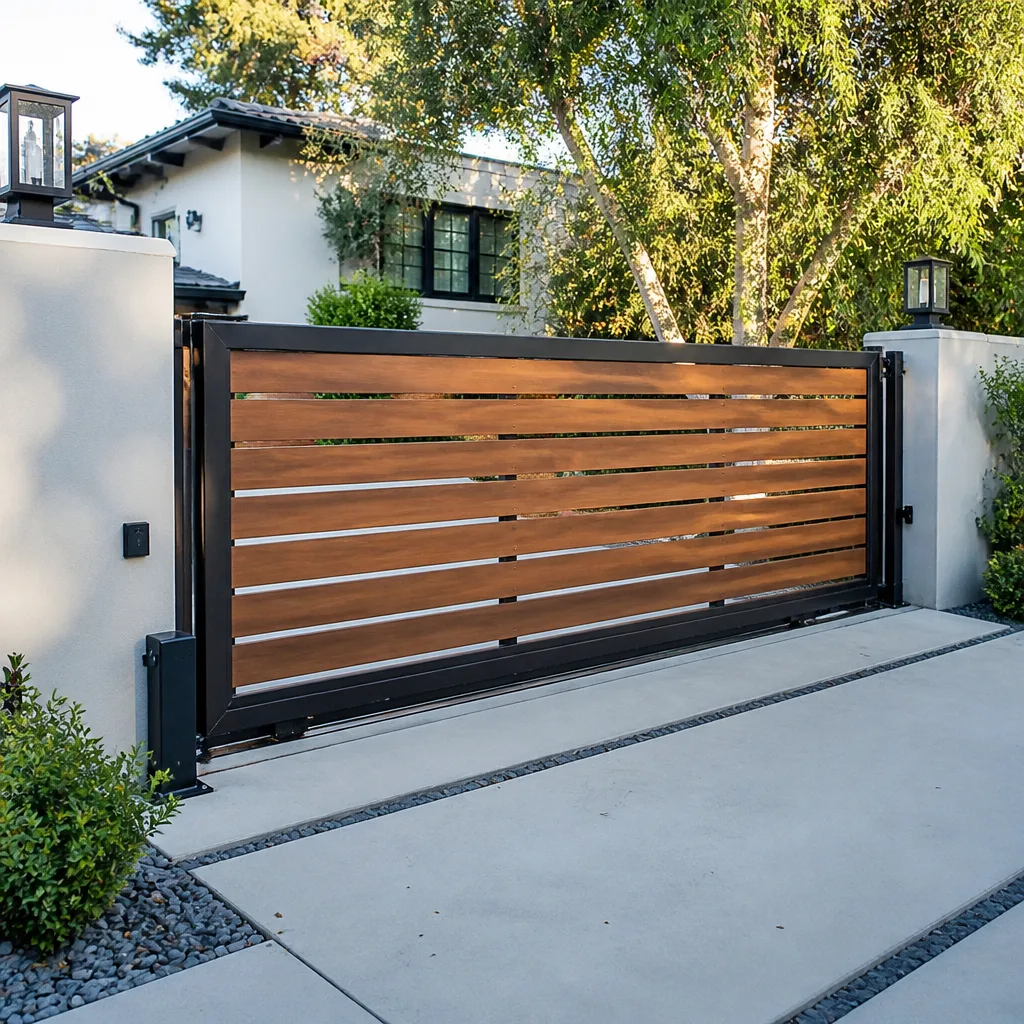 Sliding driveway gates
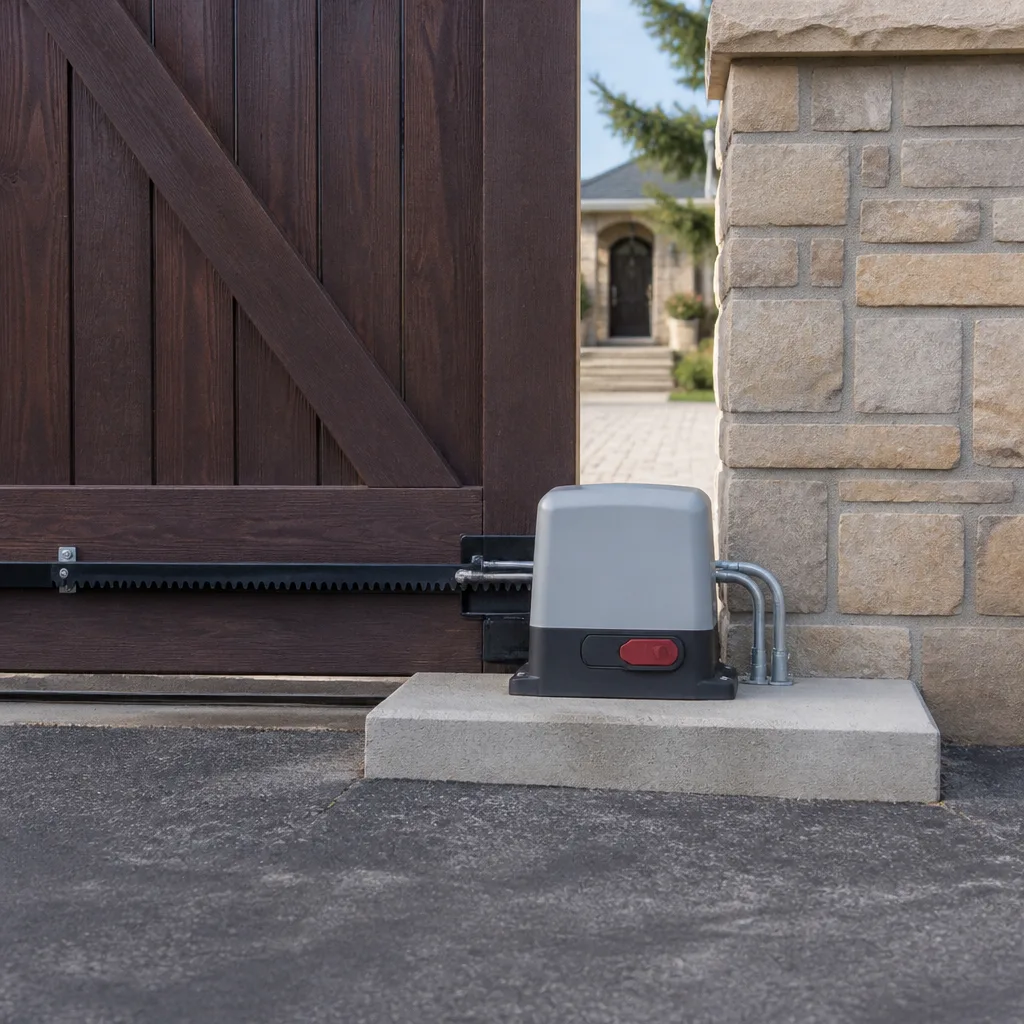 LiftMaster operators
Free on-site gate assessment - hinges, posts, and your LiftMaster or Nice gate operator checked before anything is quoted
The assessment is free and the quote is the invoice.
Get your free estimateHow to Hire a Gate Repair Contractor in Enterprise: A Step-by-Step Guide
Ask any contractor bidding your gate repair to name the two most common failure modes on the brand of operator you have installed. If they can’t answer without looking it up, they’ve likely never serviced that system before. That single question separates the specialists from the crowd in Enterprise, where garage-door companies and general fence contractors routinely list gate repair as a secondary service. Most homeowners don’t know what to ask, so they hire the first result on Google and hope. This guide gives you an exact screening framework: the questions to ask, the credentials to verify, the red flags in quotes, and the warranty language to read closely. By the end, you’ll know how to hire for demonstrated gate expertise, not a convincing phone manner.
Quick Answer
To hire a gate repair contractor in Enterprise, verify the contractor’s credentials for electrical gate work, ask brand-specific diagnostic questions on the phone before booking, and compare written quotes line by line for diagnostic labor, part grade, and warranty terms. A legitimate gate specialist can explain failure modes for your specific operator brand, separates diagnosis from parts replacement in the quote, and puts warranty coverage in writing. Skip anyone who can’t do all three.
Styles & brands we work with
- Wrought iron
- Wood & steel frame
- Farm & ranch
- Sliding driveway gates
- LiftMaster operators
Table of Contents
- Why Enterprise Homeowners Need a Gate Specialist, Not a Generalist
- What Credentials Should a Gate Repair Contractor Hold in Enterprise?
- Five Questions to Ask on the Phone Before Anyone Comes Out
- How to Read a Gate Repair Quote: Diagnosis vs. Parts
- OEM vs. Aftermarket Parts: Comparing Quotes That Use Different Grades
- What a Real Gate Specialist’s Warranty Covers
- How Enterprise Conditions Affect Gate Hardware and What to Ask
- The Step-by-Step Hiring Process
Why Enterprise Homeowners Need a Gate Specialist, Not a Generalist
A gate is not a fence with hinges. It’s a mechanical system, and on automatic gates it’s also an electrical system with an operator, a control board, safety edges, and an access method. A contractor who mostly installs fences or garage doors may handle the mechanical side fine and still be lost the moment the problem lives in the control board or the wiring. That’s the gap this guide is built around.
In our experience across Enterprise, the most common misdiagnosis we see isn’t a wrong part. It’s a right part replaced for the wrong reason because nobody tested the circuit first. A gate that won’t open can be a failed operator, a dead battery in the control board’s backup, a misaligned safety edge, or a limit switch that’s drifted. Replacing the operator when the real problem is a $30 limit switch is an expensive way to learn that your contractor was guessing.
There’s also a practical reason to hire tightly. Gate automation spans a wide range of brands, and each has its own quirks: how its control board reports faults, how its limits are set, what its manual release looks like, which safety devices it expects to see. A specialist who works across the major brands daily, including LiftMaster, FAAC, Mighty Mule, and Elite, recognizes the pattern before touching a tool. A generalist starts from zero every time and bills you for the learning curve.
Hiring well also means knowing what the job actually is. Gate Repair Enterprise is a gate-only operation, which matters when you’re evaluating anyone else: ask whether gates are the whole business or a line item on a longer service menu.
What Credentials Should a Gate Repair Contractor Hold in Enterprise?
Nevada treats gate work in two tiers, and the distinction matters when you’re vetting. Purely mechanical work, such as adjusting hinges, repairing a latch, or re-hanging a sagging swing gate, is one thing. Electrical work on the operator, the control board, the low-voltage wiring, and the access system is another, and it should be handled by someone who is properly licensed and insured to do it. Ask directly which tier the contractor holds and which part of your repair falls into it.
Verification is simpler than most people expect. You can check a contractor’s license status through the Nevada State Contractors Board, which maintains a public license lookup. Ask for the license number in writing, then confirm it yourself rather than taking a business card at face value. For insurance, request a certificate of insurance and confirm it’s current. A contractor who hesitates on either request is telling you something.
Here’s what to verify before you book:
- License status: confirm the license is active and covers the type of work being quoted, including electrical gate work if the repair involves the operator or wiring.
- Insurance: ask for a current certificate of insurance. This protects you if something goes wrong on your property.
- Scope of license: a license that covers fencing doesn’t automatically mean the holder is set up for electrical gate systems. Ask the question plainly.
- Permits: for a new gate installation or significant electrical changes, ask your city’s building department whether a permit is required before work starts. A contractor who waves off permits is a warning sign.
None of this is red tape for its own sake. Electrical gate work involves line voltage and heavy moving components, and an unlicensed or uninsured contractor leaves you holding the risk. If a gate is miswired or a safety edge is bypassed, the exposure is real. When in doubt, verify.
Five Questions to Ask on the Phone Before Anyone Comes Out
You can learn a lot before anyone sets foot on your property. The goal of these five questions is to find out whether the contractor is brand-familiar with your system or is planning to figure it out on your dime. Ask them plainly and listen to the answers.
- “What operator brand did you say you work on most?” Give them your brand and listen. A specialist will name yours and describe common issues with it. A generalist will say “we work on all of them,” which usually means none in depth.
- “What are the two most common failure modes on my brand of operator?” This is the diagnostic test. If they can answer from experience, they know the system. If they need to check, they probably haven’t serviced it.
- “Do you do your own electrical diagnosis on the control board, or do you sub that out?” Full electrical capability under one roof matters. If the board or wiring is subbed out, you’ve added a middleman and a second set of hands to the job.
- “Will your written quote separate diagnosis from parts and labor?” A specialist will. A contractor who plans to skip diagnosis and go straight to parts is telling you how they plan to bill.
- “What does your warranty cover, and will you put it in writing before the work starts?” The answer reveals whether they stand behind the repair or bury the caveats.
If a contractor aces all five, you’re likely talking to someone who specializes. If they stumble on two or more, keep calling. The phone screen takes ten minutes and saves you the trouble of a bad on-site visit. Call gate repair with your brand and system details ready and you’ll see the difference in how the questions get answered.
How to Read a Gate Repair Quote: Diagnosis vs. Parts
A quote that jumps straight to parts replacement without a line for diagnostic labor is not efficient. It’s a warning sign. Diagnosis is where a contractor determines what’s actually failing, and skipping it means they’re either guessing or planning to pad the job with parts you may not need. A proper quote walks a clear sequence.
- Diagnostic labor: time to test the operator, control board, wiring, safety edges, and limits. This should appear as its own line, not vanish into a bundle.
- Parts, itemized: each part named with its grade (OEM or aftermarket) and quantity. “Miscellaneous hardware” is not an itemized part.
- Labor for the repair: the work of installing what the diagnosis identified, separate from the diagnosis itself.
- Warranty terms: in writing, on the quote, not verbally after the fact.
- What happens if the diagnosis changes: the quote should say that additional findings get your approval before any extra work proceeds.
Read the quote as a sequence: we test, we identify, we quote the fix, you approve, we repair. Any step missing is a place where you lose visibility. When a contractor hands you a one-line quote that says “replace operator: [price],” ask them to break it down. A specialist won’t mind. A generalist will push back, and that pushback is your answer.
Compare quotes on the same scope. Two quotes that both say “repair the operator” aren’t comparable if one includes diagnosis and a safety-edge test and the other treats both as an afterthought. Line them up side by side and match the line items. The higher quote with the fuller diagnosis is sometimes the better value. An electric gate repair quote should show you exactly what gets tested and what gets replaced, and it should read the same with you as it does with the next customer.
OEM vs. Aftermarket Parts: Comparing Quotes That Use Different Grades
Two quotes for the same repair can differ by a lot and both be legitimate, because they may be using different grades of part. An OEM part, original equipment manufacturer, is the same part the gate builder specified. An aftermarket part is a third-party equivalent, which may be a solid match or may be a compromise. Neither grade is automatically wrong. The problem is a quote that doesn’t tell you which one you’re getting.
Comparison only works when the grades line up. When you have quotes in hand, do this:
- Ask each contractor to specify OEM or aftermarket for every part on the quote.
- Get the part name and, where possible, the manufacturer so you can confirm the grade.
- Ask how the warranty differs between grades. Aftermarket parts often carry shorter coverage from the contractor.
- If the price gap is large, ask what accounts for it. A specialist can explain the difference between an OEM operator and an aftermarket clone without hedging.
On some brands, aftermarket parts are plentiful and the quality varies widely. On others, the smart move is OEM, especially when the control board or operator is involved. What matters is that the contractor knows the difference and can say so. A quote that just says “replace board” without a grade is a quote you can’t compare. Push for the spec. A specialist working with details from Enterprise will tell you what the brand and rating are without being asked twice.
What a Real Gate Specialist’s Warranty Covers
Warranty language is where generalists hide. A specialist’s warranty is specific about what’s covered, for how long, and under what conditions. Boilerplate is vague, long, and mostly concerned with what the contractor won’t be responsible for. Read the warranty on the quote before you sign, and look for these differences.
- Labor vs. parts: the strongest warranties cover both, not just one. A parts-only warranty can still leave you paying full labor if the replacement fails.
- Covered conditions: a specialist names what’s covered, such as the repair itself or the installed part for a stated period. Boilerplate lists only exclusions.
- Root cause: if a board fails because of an underlying wiring issue the contractor didn’t fix, a good warranty reflects that they own the diagnosis. Generalists often disclaim this.
- What voids it: a specialist will tell you plainly, for example if someone else works on the gate after the repair. That’s fair. What’s not fair is burying the void conditions in dense language.
- A written statement on the quote: the warranty terms appear where you can see them before you pay, not in a document signed after the work.
Ask for the warranty in writing and read it next to the quote. If the warranty page is longer than the quote and mostly about what the contractor isn’t liable for, that’s the language to watch. A gate specialist can summarize the warranty in a sentence and stand by it.
How Enterprise Conditions Affect Gate Hardware and What to Ask
Enterprise is desert country, and that shapes what fails on a gate. The things that break here aren’t the things that break in a wetter climate. The heat matters, the sun matters, the wind matters, and the dust matters. Knowing which components take the hit helps you ask smarter questions and spot a contractor who’s actually seen these problems before.
Plastic and rubber components on the operator, the safety edges, and the weather seals take the worst of the sun and heat. UV exposure degrades plastic over time, and a safety edge whose rubber has stiffened can stop responding correctly. Dust and grit work into the tracks and the hinges, especially on sliding gates, and accelerate wear on rollers and moving parts. Wind gusts common to the region can knock a swing gate out of alignment or stress the operator over time. If your gate is on a long run with low voltage wire in the ground, heat and soil conditions can affect the wiring.
When you interview contractors, ask what they expect to find on a gate in this climate. Ask specifically about operator components exposed to full sun, about track wear from grit, and about how they maintain the alignment of a gate that gets regular wind. A specialist will speak to all three without prompting. A generalist will circle back to “we’ll take a look when we get there.”
Ask too about operating time. An operator that runs all day in high heat is doing more work than one in a cooler climate, and it ages faster. That’s a reason to pay attention to how the operator is set up and how often the gate is cycled. A specialist can tell you what to watch for. Gate Repair Enterprise works on LiftMaster, FAAC, Mighty Mule, Elite, and the other major brands, and the climate conversation is part of every assessment.
The Step-by-Step Hiring Process
Here’s the whole process in order. Follow these steps and you’ll be dealing with a gate specialist from the first call.
- Identify the problem and note the brand. Before calling anyone, write down the operator brand, model if visible, whether the gate is swing or slide, and what it’s doing or not doing. This shapes every question that follows.
- Call two or three contractors and run the five phone questions. Note who answers from experience and who hedges. Ask each to name their license and insurance status.
- Verify the credentials yourself. Check the license through the Nevada State Contractors Board and request proof of insurance.
- Book the on-site diagnosis. The specialist should test the operator, control board, wiring, safety edges, and limits, not just eyeball the gate.
- Get a written quote with diagnosis, parts, labor, and warranty broken out. Insist on OEM or aftermarket for every part, and a stated grade.
- Compare quotes on the same scope. Match line items. A cheaper quote missing diagnosis or with vague parts is not a real comparison.
- Approve the written price before work starts. The written estimate sets the final price. Nothing gets added without your approval.
- Read the warranty and keep the paperwork. The warranty covers what it says it covers. Know before the repair, not after.
If you ever want to shorten the list, a gate-only specialist skips several of these steps because they’re built in. Brand expertise, full electrical capability, and installation under one roof reduce the number of people involved in your repair. When you need a full replacement after a diagnosis, the same specialist can quote the installation. From a stuck gate to a full installation, one contact handles it.
Common Mistakes to Avoid
- Hiring on price alone. A quote that’s dramatically lower than the rest usually means a missing step, such as skipped diagnosis or an aftermarket part that won’t last. Ask what the cheaper quote doesn’t include before you sign.
- Not asking for the brand. A contractor who can’t name the operator brand and describe how it fails is learning on your property. Ask the diagnostic questions first.
- Accepting a quote with no diagnostic line. Jumping straight to parts replacement is a warning sign, not efficiency. You deserve to know what was tested and why the part was chosen.
- Overlooking license and insurance verification. A business card is not proof. Check the license through the Nevada board and get a current certificate of insurance in writing.
- Skipping the OEM vs. aftermarket question. No grade on the quote means no comparison. Insist on grade for each part, and compare quotes that use the same grade.
- Ignoring the warranty fine print. A warranty that covers parts but not labor, or that disclaims liability for the root cause, isn’t doing much. Read it before signing.
- Assuming a garage-door company handles gates. Gates and garage doors share some parts philosophy but not all. A gate specialist knows the access systems, safety edges, and operator brands specific to gates.
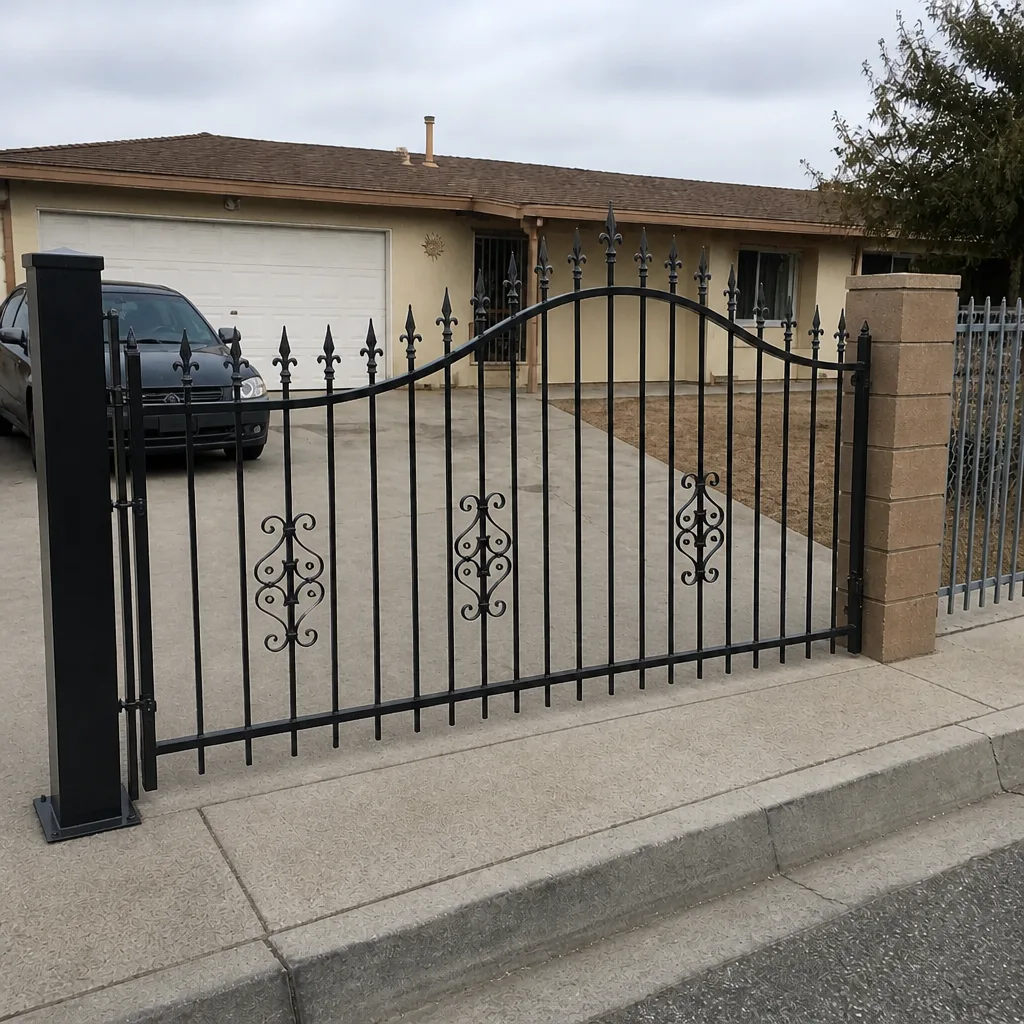
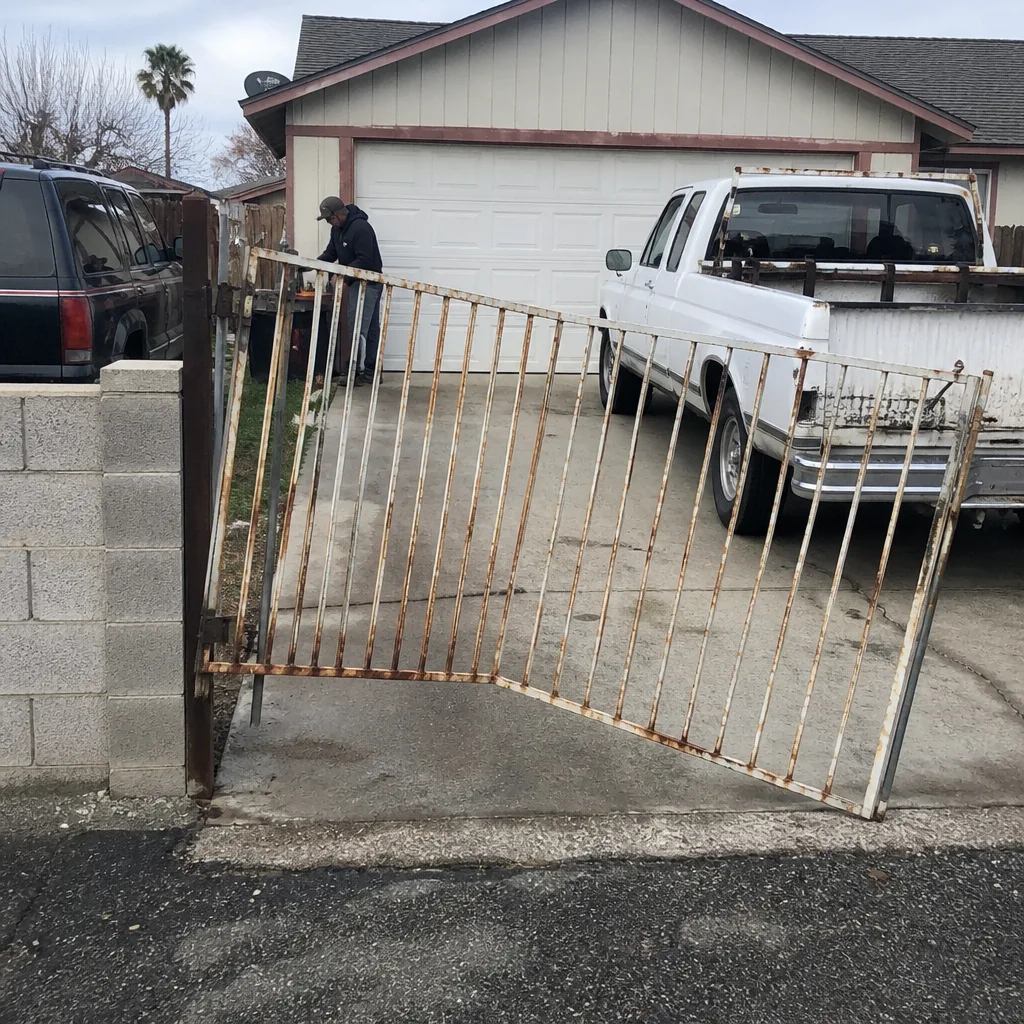
See the difference
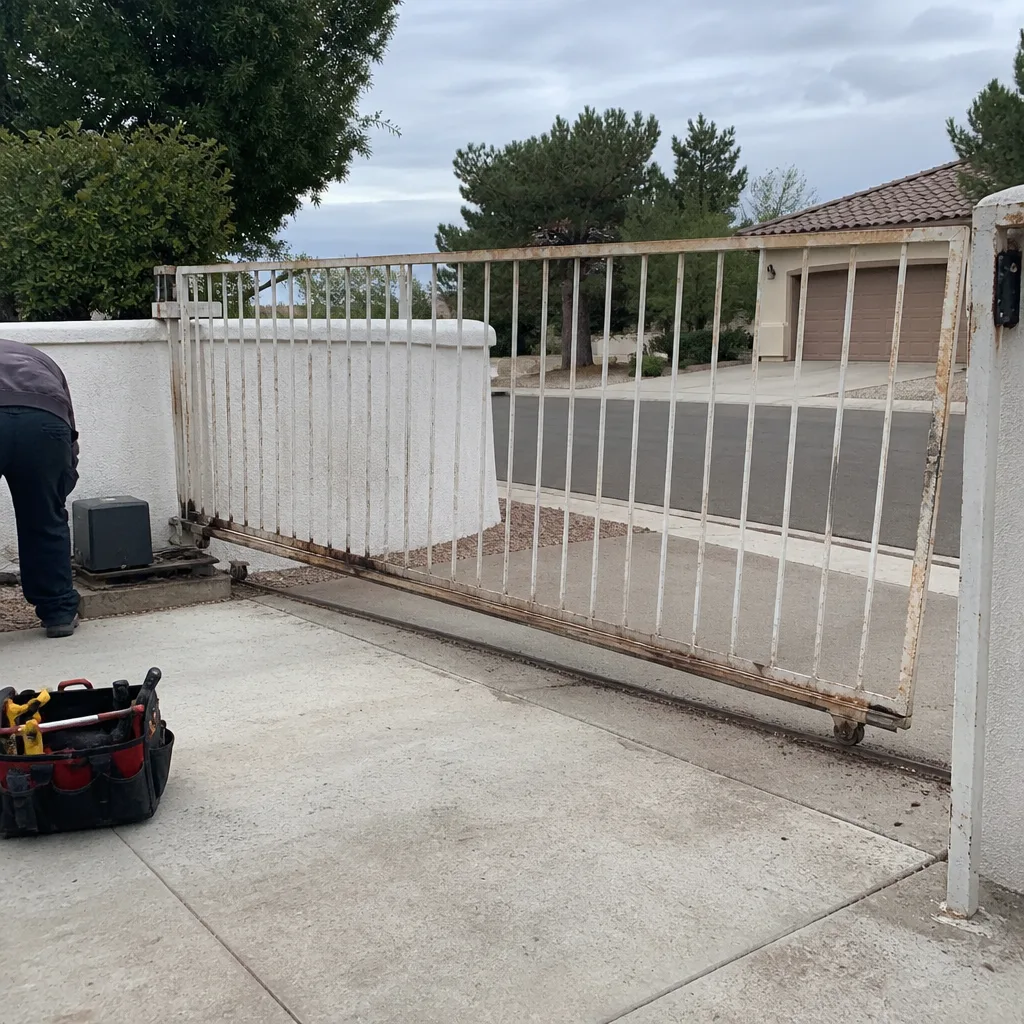 Before
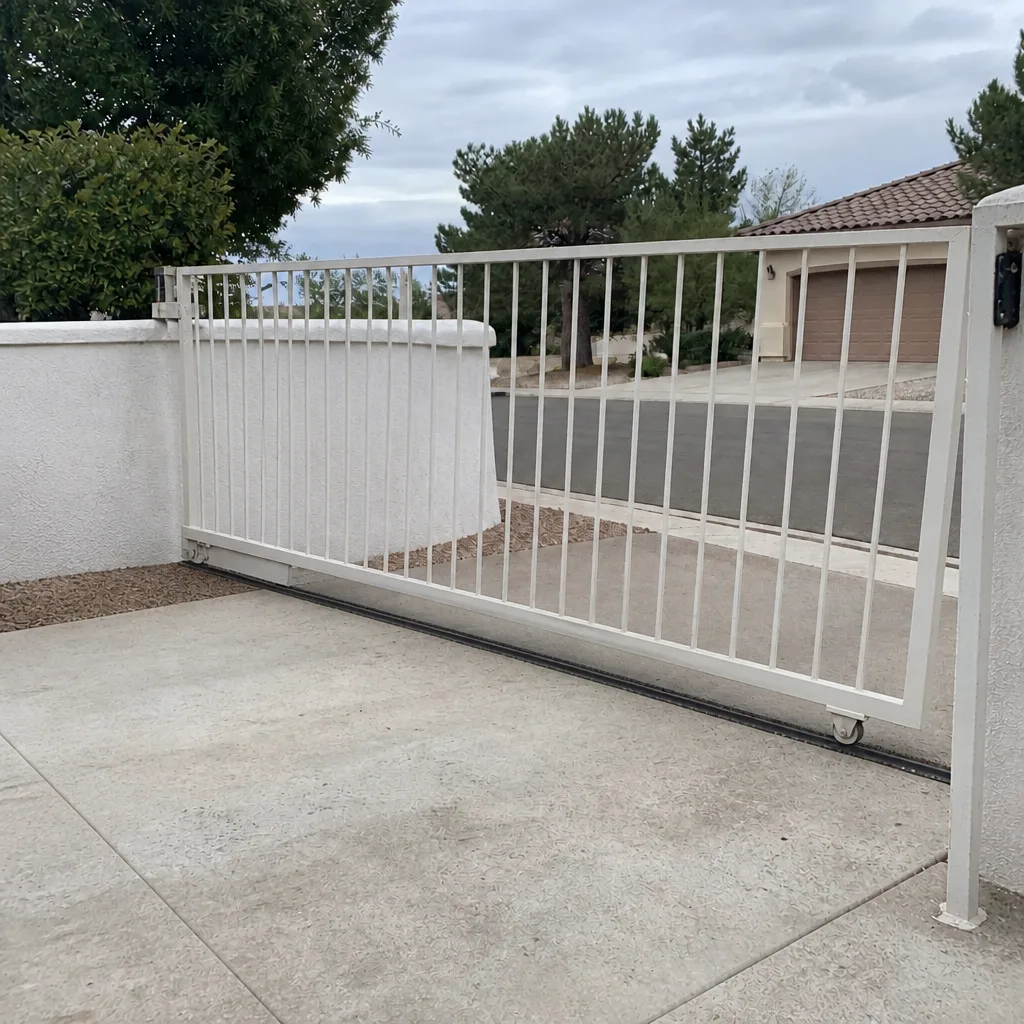 After
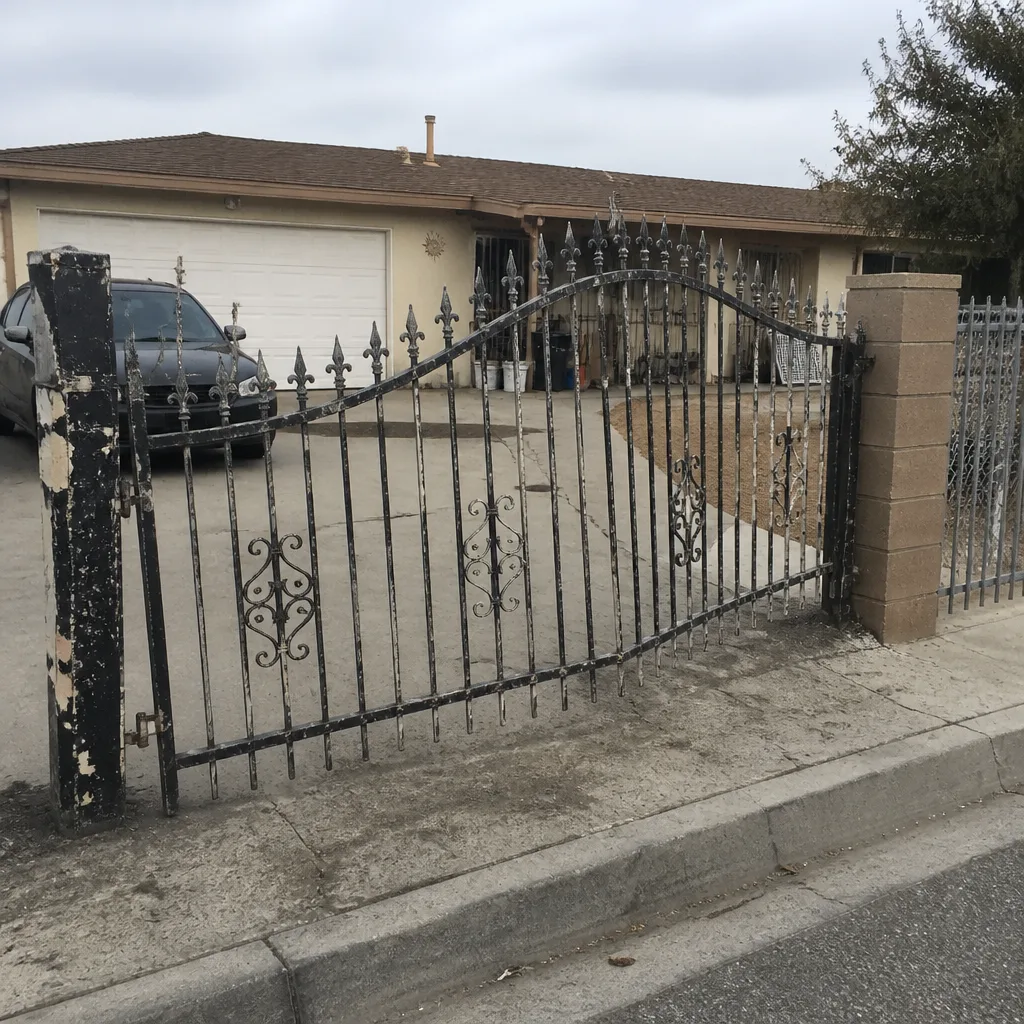 Before
 After
 Before
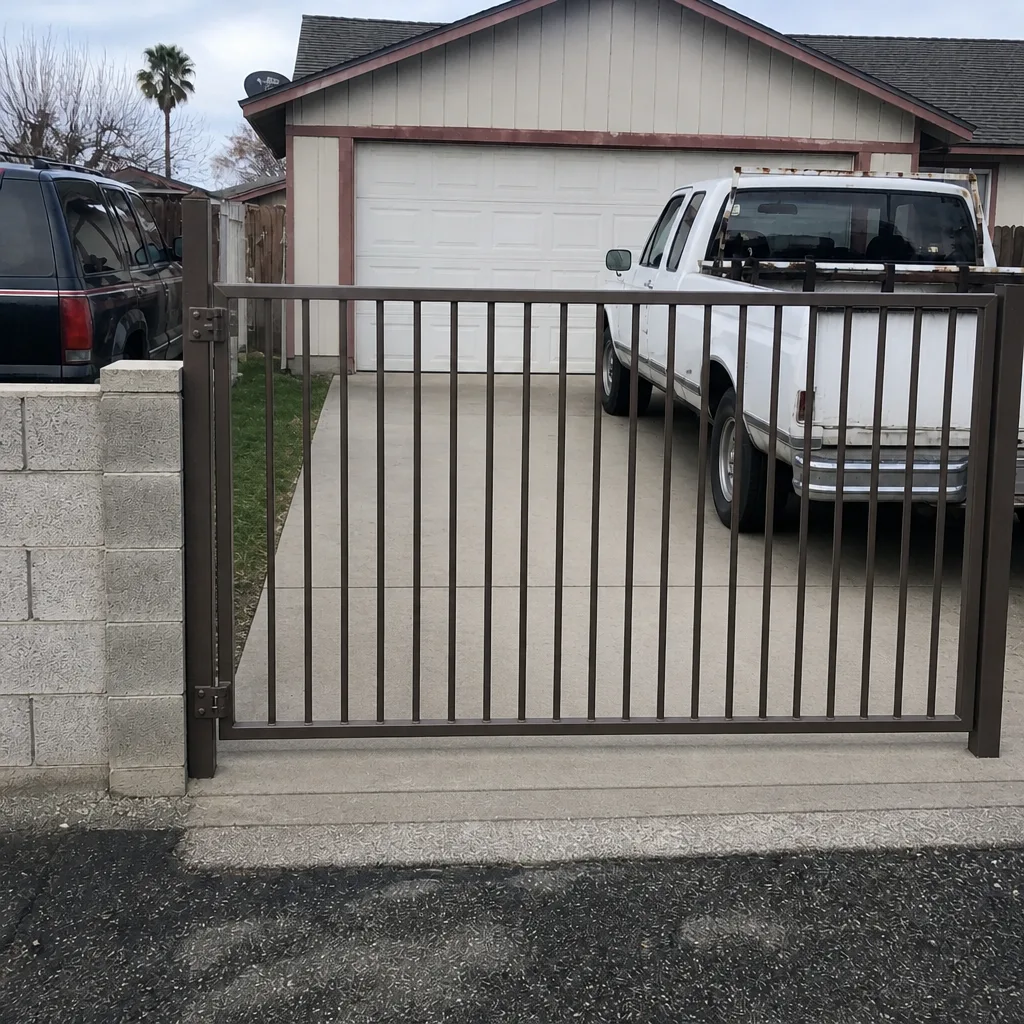 After
When to Call a Professional
A gate that stops opening can sometimes be corrected by the homeowner, such as resetting a tripped breaker or re-engaging a manual release. But some problems should go straight to a professional. If the operator has power but won’t respond, if the control board shows fault indicators, if a safety edge fails its test, or if the gate has come off its track or a swing panel has begun to sag, get a trained technician on it.
Electrical gate work involves line voltage and heavy moving components, and the operator, wiring, control board, and safety edges are not things to troubleshoot by trial and error. A miswired access system or a bypassed safety edge leaves the gate unsafe, and a heavy swing panel that comes loose is a real hazard. For anything touching the electrical side, call a professional. Gate Repair Enterprise offers free estimates in Enterprise. Call (844) 423-3067. We answer 24/7. Fast dispatch from 7am to 7pm, Sunday through Friday.
Frequently Asked Questions
The cost of a gate repair in Enterprise depends on the diagnosis: a limit switch adjustment costs far less than a control board replacement, and an operator repair prices differently from a full installation. The price is quoted per job by a written estimate before any work starts, and the written estimate sets the final price. Get a free estimate rather than guessing. Call (844) 423-3067 for an exact quote.
Yes. Nevada separates purely mechanical gate work from electrical work on the operator, control board, and wiring, and the electrical side requires the appropriate license. Verify a contractor’s license through the Nevada State Contractors Board and confirm they hold coverage for the work being quoted. Ask for the license number and insurance certificate in writing before the repair is scheduled.
Some can, but many can’t. Gate systems have their own operator brands, control boards, safety edges, and access methods, and a company that mostly handles garage doors may not have the brand-specific experience on your system. Ask which brands they service most often and whether they handle electrical diagnosis in-house. If the answer is vague, look for a gate specialist.
The clearest sign is a quote that skips diagnostic labor and jumps straight to parts replacement. Other signs include no brand or grade specified for the parts, no warranty terms in writing, and no line for what happens if the diagnosis changes. A real specialist shows the diagnosis, names the parts, and writes the warranty on the quote. Call (844) 423-3067 to compare a written estimate.
A true gate specialist should be fluent across the major operator brands. Gate Repair Enterprise services LiftMaster, FAAC, BFT, Linear, Viking, Ghost Controls, DoorKing, Elite, and Mighty Mule. If your gate runs on one of these, the brand-specific questions will get answered from experience. If a contractor tells you “we don’t work on that brand,” that’s a reason to keep looking rather than settle.
Yes. A gate specialist should handle both, so a repair assessment that turns into a full replacement doesn’t require you to source a separate installer. The same contact from diagnosis through the install keeps the scope clear and the price honest. For a replacement quote in Enterprise, call (844) 423-3067. Estimates are free, and the written estimate sets the final price.
The Bottom Line
Hiring a gate repair contractor in Enterprise comes down to a single test: does the contractor demonstrate brand-specific gate expertise before you sign anything? Run the five phone questions, verify license and insurance, insist on a quote that separates diagnosis from parts, compare quotes on the same grade of part, and read the warranty. A specialist will clear every step without hedging. A generalist will stall on at least one. That gap is the whole point of vetting. If you want to skip the search, a gate-only specialist covers repair, electric gate repair, and installation with one call. Call (844) 423-3067 for a free estimate. We answer 24/7. Fast dispatch from 7am to 7pm, Sunday through Friday.
Written by the team at Gate Repair Enterprise.